
Commentary on Luke 1:45
Text
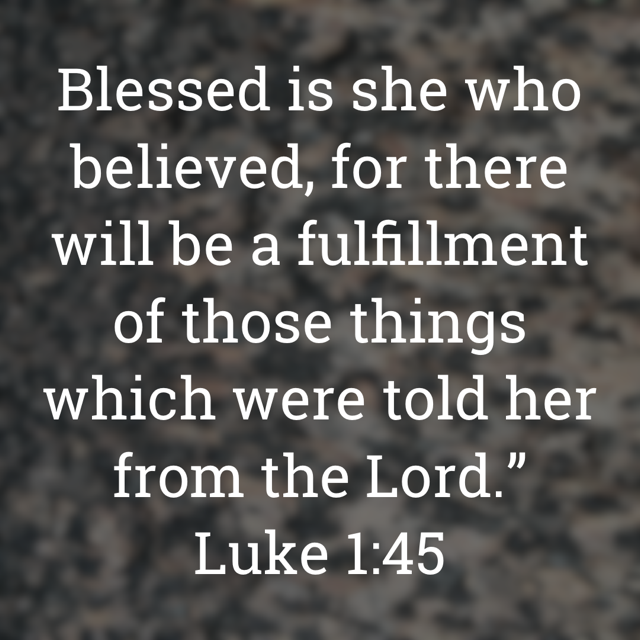
“Blessed is she who believed, for there will be a fulfilment of those things which were told her from the Lord.”
This verse captures the heart of Elizabeth’s Spirit-filled affirmation to Mary. It celebrates Mary’s faith in the promise spoken to her by the Lord. Even in this brief portion, the emphasis is unmistakable: blessing is tied to belief, and belief is tied to the reliability of God’s word.
1. Literary and Narrative Context (Luke 1)
Luke chapter 1 introduces two miraculous conceptions:
- The conception of John the Baptist to Elizabeth and Zechariah.
- The conception of Jesus Christ to Mary by the Holy Spirit.
Luke presents these events not as isolated miracles but as the unfolding of God’s covenant promises. The chapter is filled with Old Testament echoes, prophetic fulfilment, and divine initiative. God acts; his people respond.
Mary’s visit to Elizabeth (Luke 1:39–56) forms a meeting of two women who stand at the turning point of salvation history. Elizabeth, filled with the Holy Spirit, recognises Mary’s unique role and speaks words of blessing over her. The blessing is not grounded in Mary’s status, virtue, or merit, but in her faith in God’s promise.
2. Exegetical Insights from Luke 1:45
a. “Blessed” — A covenantal category
In Scripture, “blessed” is not a sentimental word. It is a covenantal declaration of God’s favour. Mary is blessed because God has acted graciously toward her, and she has responded in faith. This aligns with the broader biblical pattern: blessing flows from God’s initiative and is received through trust in his word.
b. “She who believed” — Faith as the distinguishing mark
Elizabeth contrasts Mary’s faith with Zechariah’s earlier hesitation (Luke 1:18–20). Both received angelic announcements, but Mary responded with humble trust. Her question (“How can this be?”) sought understanding, not proof. Faith is not blind; it seeks clarity while resting in God’s character.
c. “For there will be a fulfilment” — The certainty of God’s word
Elizabeth’s Spirit-inspired declaration affirms that God’s promises are not tentative. They are certain. The fulfilment does not depend on human strength, ingenuity, or worthiness. God brings his word to pass. This is a deeply Christian theme: God’s sovereign faithfulness undergirds human faith.
d. “Of those things which were told her from the Lord” — Revelation as the foundation of faith
Mary’s faith is not generic optimism. It is trust in a specific word from God. Christian faith is always anchored in God’s revealed truth, not in feelings, intuition, or cultural sentiment. Mary believed because God had spoken.
Theological Themes
1. God’s Sovereign Grace
Luke 1 emphasises that salvation begins with God. He chooses, calls, and empowers. Mary’s role is entirely a work of divine grace. Christian theology rightly sees Mary not as a co-redeemer but as a humble recipient of God’s mercy.
2. Faith as Response, Not Contribution
Mary’s belief does not earn God’s blessing; it receives it. Faith is the empty hand that takes hold of God’s promise. This aligns with the Christian understanding of faith as a gift of God’s grace (Ephesians 2:8–9).
3. The Reliability of God’s Word
Elizabeth’s declaration underscores the absolute trustworthiness of God’s promises. This is foundational for Christian assurance. God does not speak in probabilities. He speaks in certainties.
4. The Joy of Shared Faith
Mary and Elizabeth’s meeting shows the beauty of fellowship among believers. God often confirms his promises through the encouragement of others.
Meditation Guide on Luke 1:45
Use these steps for personal reflection, prayer, or small group meditation.
1. Read the surrounding narrative (Luke 1:26–56)
Reflect on the contrast between Mary’s faith and Zechariah’s hesitation. Consider how God deals gently with both.
2. Reflect on the nature of faith
Ask:
- What does it mean for me to “believe” God’s promises today?
- Where am I tempted to trust my circumstances more than God’s word?
3. Consider the reliability of God’s promises
Meditate on God’s character. He is faithful, sovereign, and unchanging.
Ask:
- Which promises of God do I need to cling to more firmly?
4. Give thanks for God’s grace
Mary’s story is a reminder that God uses ordinary people for extraordinary purposes.
Pray:
- “Lord, thank you that your grace is greater than my weakness.”
5. Seek fellowship and encouragement
Mary went to Elizabeth. Faith grows in community.
Ask:
- Who can I encourage today with God’s promises?
- Who encourages me in my walk with Christ?
Application to Modern Christian Living
1. Trust God’s Word above all else
In a culture of uncertainty, God’s promises remain firm. Christians are called to build their lives on Scripture, not shifting cultural trends.
2. Respond to God with humble faith
Mary’s example encourages believers to say, “Let it be to me according to your word.” Faith is not passive; it is active trust.
3. Embrace God’s calling, even when it is costly
Mary’s obedience brought social risk, misunderstanding, and hardship. Faithfulness today may also require courage.
4. Encourage one another in the faith
Elizabeth’s blessing strengthened Mary. Christians today should speak gospel truth into each other’s lives.
5. Rest in God’s sovereign faithfulness
The fulfilment of God’s promises does not depend on our strength. This brings deep assurance and peace.
Discover more from Daily bible verses
Subscribe to get the latest posts sent to your email.


You must be logged in to post a comment.