
Commentary on 2 Corinthians 9:6
The Text
2 Corinthians 9:6 (King James Version):
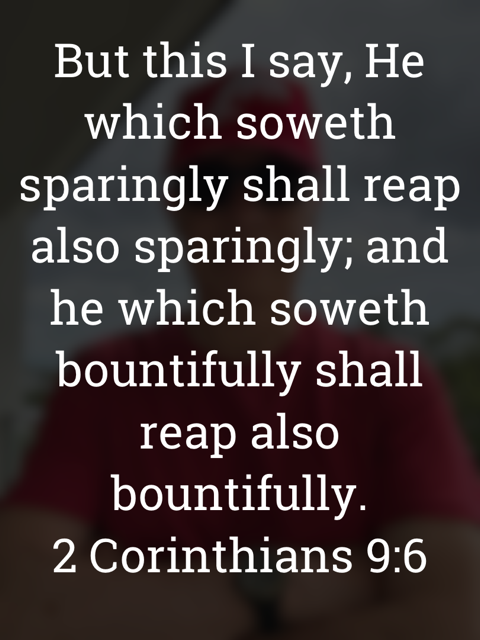
“But this I say, He which soweth sparingly shall reap also sparingly; and he which soweth bountifully shall reap also bountifully.”
1. Setting the Scene: The Context of 2 Corinthians Chapter 9[i]
The Apostle Paul is writing to the church in Corinth about a financial collection for the poor believers in Jerusalem. He is encouraging the Corinthians to complete the generous commitment they had already made. The whole chapter is pastoral, warm, and deeply theological. It is not about manipulation or pressure. It is about grace, generosity, and the character of God.
Paul reminds them earlier in the chapter:
2 Corinthians 9:5 (King James Version):
“Therefore I thought it necessary to exhort the brethren, that they would go before unto you, and make up beforehand your bounty, whereof ye had notice before, that the same might be ready, as a matter of bounty, and not as of covetousness.”
Paul wants their giving to be willing, joyful, and shaped by the grace of God, not by guilt or compulsion.
2. Exegesis of 2 Corinthians 9:6
“But this I say…”
Paul is drawing attention to a principle that is both spiritual and practical. He is not introducing a new law but explaining how God’s economy works.
“He which soweth sparingly shall reap also sparingly…”
Paul uses the image of farming. A farmer who plants only a few seeds should not expect a large harvest. This is not punishment; it is simply how sowing and reaping work.
In the context of Christian giving, Paul is saying that a believer who gives reluctantly, cautiously, or minimally should not expect to experience the fullness of God’s blessing in the area of generosity. This is not a prosperity gospel promise of wealth. It is a spiritual truth: when we hold tightly to our resources, we often experience a smallness of soul.
“…and he which soweth bountifully shall reap also bountifully.”
The word “bountifully” carries the sense of generosity, open-handedness, and blessing. The believer who gives freely, joyfully, and generously will experience a rich harvest. Again, this is not a guarantee of financial return. Paul is speaking about the spiritual fruit of generosity: joy, freedom, trust in God, and participation in God’s work.
Later in the chapter Paul expands this idea:
2 Corinthians 9:8 (King James Version):
“And God is able to make all grace abound toward you; that ye, always having all sufficiency in all things, may abound to every good work.”
The harvest is grace, sufficiency, and the ability to do good.
3. Theological Insights
A. God is the Source of All Generosity
Paul roots Christian giving in the character of God. God is the One who supplies seed to the sower:
2 Corinthians 9:10 (King James Version):
“Now he that ministereth seed to the sower both minister bread for your food, and multiply your seed sown, and increase the fruits of your righteousness.”
Everything we have comes from God. Our giving is simply returning a portion of what he has entrusted to us.
B. Giving Is an Act of Grace
Paul never treats giving as a mere duty. It is a grace-filled response to the grace we have received in Jesus Christ. In the previous chapter he says:
2 Corinthians 8:9 (King James Version):
“For ye know the grace of our Lord Jesus Christ, that, though he was rich, yet for your sakes he became poor, that ye through his poverty might be rich.”
Generosity flows from the gospel.
C. Giving Is a Spiritual Discipline That Shapes the Heart
Sowing and reaping are not transactional. It is transformational. Generosity forms Christlike character. It teaches us to trust God rather than money. It frees us from fear and self-protection.
D. Giving Produces Thanksgiving to God
Paul emphasises that generosity leads others to praise God:
2 Corinthians 9:12 (King James Version):
“For the administration of this service not only supplieth the want of the saints, but is abundant also by many thanksgivings unto God.”
Generosity is missional. It points people to the goodness of God.
4. Application to Modern Christian Living
A. Give Generously, Not Reluctantly
Paul’s principle challenges us to examine our hearts. Do we give sparingly because we fear lack? Or do we give bountifully because we trust God?
B. Give Joyfully and Willingly
Paul continues in the next verse:
2 Corinthians 9:7 (King James Version):
“Every man according as he purposeth in his heart, so let him give; not grudgingly, or of necessity: for God loveth a cheerful giver.”
Christian giving is not about pressure. It is about joy.
C. Trust God’s Provision
God promises sufficiency, not luxury. He promises grace, not guaranteed wealth. The believer who gives generously can trust that God will supply what is needed.
D. See Giving as Worship
Generosity is not merely financial. It includes time, hospitality, encouragement, and service. Every act of giving is an act of worship.
E. Remember the Harvest Is Spiritual
The richest harvest is not money. It is a deeper experience of God’s grace, a freer heart, and the joy of participating in God’s mission.
5. Meditation Guide
Use the following steps to meditate on 2 Corinthians 9:6.
Step 1: Read the Verse Slowly
“But this I say, He which soweth sparingly shall reap also sparingly; and he which soweth bountifully shall reap also bountifully.”
Let the imagery of sowing and reaping settle in your mind.
Step 2: Reflect on Your Own Patterns of Giving
Where do you sow sparingly?
Where do you sow bountifully?
What fears or habits shape your giving?
Step 3: Consider the Character of God
Reflect on God’s generosity to you in Jesus Christ.
How does his grace invite you into a life of open-handedness?
Step 4: Pray for a Cheerful and Generous Heart
Ask God to free you from fear and to fill you with joy in giving.
Step 5: Act in Faith
Identify one practical step of generosity you can take this week.
Do it quietly, joyfully, and in faith.
[i] 2 Corinthians 9
King James Version
9 For as touching the ministering to the saints, it is superfluous for me to write to you:
2 For I know the forwardness of your mind, for which I boast of you to them of Macedonia, that Achaia was ready a year ago; and your zeal hath provoked very many.
3 Yet have I sent the brethren, lest our boasting of you should be in vain in this behalf; that, as I said, ye may be ready:
4 Lest haply if they of Macedonia come with me, and find you unprepared, we (that we say not, ye) should be ashamed in this same confident boasting.
5 Therefore I thought it necessary to exhort the brethren, that they would go before unto you, and make up beforehand your bounty, whereof ye had notice before, that the same might be ready, as a matter of bounty, and not as of covetousness.
6 But this I say, He which soweth sparingly shall reap also sparingly; and he which soweth bountifully shall reap also bountifully.
7 Every man according as he purposeth in his heart, so let him give; not grudgingly, or of necessity: for God loveth a cheerful giver.
8 And God is able to make all grace abound toward you; that ye, always having all sufficiency in all things, may abound to every good work:
9 (As it is written, He hath dispersed abroad; he hath given to the poor: his righteousness remaineth for ever.
10 Now he that ministereth seed to the sower both minister bread for your food, and multiply your seed sown, and increase the fruits of your righteousness;)
11 Being enriched in every thing to all bountifulness, which causeth through us thanksgiving to God.
12 For the administration of this service not only supplieth the want of the saints, but is abundant also by many thanksgivings unto God;
13 Whiles by the experiment of this ministration they glorify God for your professed subjection unto the gospel of Christ, and for your liberal distribution unto them, and unto all men;
14 And by their prayer for you, which long after you for the exceeding grace of God in you.
15 Thanks be unto God for his unspeakable gift.
Discover more from Daily bible verses
Subscribe to get the latest posts sent to your email.


You must be logged in to post a comment.