
Commentary on Hebrews 12:11
1. The Text
Hebrews 12:11 (King James Version):
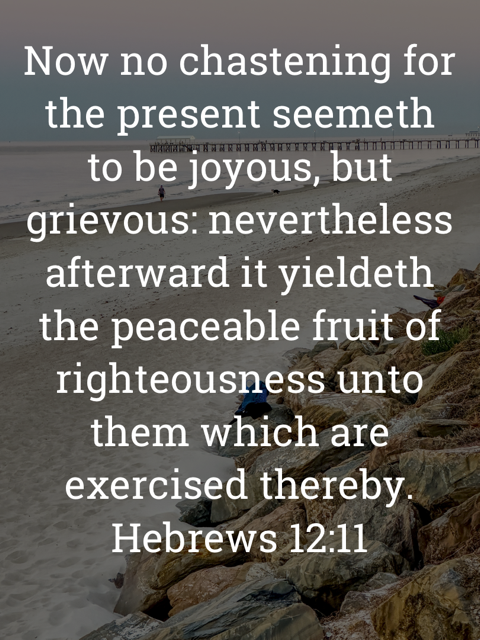
“Now no chastening for the present seemeth to be joyous, but grievous: nevertheless afterward it yieldeth the peaceable fruit of righteousness unto them which are exercised thereby.”
This single verse sits within a larger pastoral exhortation in Hebrews 12, where the writer urges believers to endure hardship as God’s loving discipline. The chapter as a whole frames the Christian life as a long-distance race, sustained by the example of Jesus Christ and shaped by the Father’s purposeful training.
2. Exegetical Commentary
2.1 The Context of Hebrews 12
Hebrews 12[i] begins with a call to perseverance:
Hebrews 12:1 (King James Version):
“Wherefore seeing we also are compassed about with so great a cloud of witnesses, let us lay aside every weight, and the sin which doth so easily beset us, and let us run with patience the race that is set before us.”
The “cloud of witnesses” refers back to the faithful saints of Hebrews chapter 11. Their lives testify that God sustains His people through trials. The writer then directs our gaze to Jesus Christ:
Hebrews 12:2 (King James Version):
“Looking unto Jesus the author and finisher of our faith; who for the joy that was set before him endured the cross…”
The argument is clear: if Jesus endured suffering for our salvation, we should not be surprised when God uses hardship to shape us.
Verses 5 to 10 introduce the theme of divine discipline:
Hebrews 12:6 (King James Version):
“For whom the Lord loveth he chasteneth, and scourgeth every son whom he receiveth.”
Discipline is not punishment for sin in a judicial sense. Christ has borne that. Rather, it is the loving training of a Father who is committed to our holiness.
This leads directly to verse 11.
2.2 Phrase-by-Phrase Exegesis of Hebrews 12:11
“Now no chastening for the present seemeth to be joyous, but grievous”
The writer acknowledges the obvious: discipline hurts. The word “chastening” includes correction, training, and instruction. It is not merely punitive; it is formative. Yet the experience is “grievous.” The Bible does not minimise suffering or pretend that Christians should enjoy hardship.
This honesty is pastorally important. God does not ask us to pretend that pain is pleasant. He asks us to trust Him in it.
“nevertheless afterward”
This is the hinge of hope. The Christian life is shaped by the “afterward.” God’s purposes are often hidden in the moment but revealed in time. The writer invites us to adopt a long-term, eschatological perspective.
“it yieldeth the peaceable fruit of righteousness”
The metaphor is agricultural. Discipline is like pruning: painful cuts that produce healthy growth. The “peaceable fruit of righteousness” refers to a life increasingly aligned with God’s character and will. It is peace that flows from holiness, not peace that avoids hardship.
This aligns with verse 10:
Hebrews 12:10 (King James Version):
“but he for our profit, that we might be partakers of his holiness.”
God’s goal is not comfort but Christlikeness.
“unto them which are exercised thereby”
This phrase is crucial. Discipline does not automatically produce righteousness. It benefits those who submit to it, who allow themselves to be “exercised” or trained by it. The imagery is athletic: spiritual muscles strengthened through resistance.
This echoes verse 1’s call to “run with patience”.
3. Theological Insights
3.1 God’s Fatherly Love
Christian theology emphasises God’s fatherly care for His children. Discipline is an expression of love, not wrath. The Heidelberg Catechism speaks of God as a Father who “so rules” all things that nothing comes to us by chance but by His fatherly hand.
Hebrews 12 reinforces this: God disciplines because He receives us as sons and daughters.
3.2 Sanctification as a Lifelong Process
The “peaceable fruit of righteousness” is the fruit of sanctification. It is gradual, often slow, and frequently painful. God uses trials to refine our faith, deepen our dependence, and shape our character.
3.3 The Necessity of Perseverance
The Christian life is a race requiring endurance. Discipline is part of God’s means of preserving His people. Those who are “exercised” by discipline grow; those who resist it stagnate.
3.4 Christ as the Model and the Means
Jesus Christ endured suffering for the joy set before Him. He is both our example and our enabler. We endure because He endured. We grow because His Spirit works in us.
4. Application to Modern Christian Living
4.1 Do Not Be Surprised by Hardship
Christians today often face pressures—workplace stress, family conflict, illness, disappointment, or spiritual dryness. Hebrews 12:11 teaches us not to interpret hardship as abandonment but as God’s loving involvement.
4.2 Embrace God’s Training Rather Than Resisting It
Ask:
- What might God be teaching me through this?
- How can this situation shape me to be more like Christ?
- Am I responding with trust or resentment?
4.3 Look for the “Afterward”
The fruit of righteousness is often seen only in hindsight. Cultivate patience. Trust that God is at work even when you cannot see it.
4.4 Pursue Peace and Holiness
Later in the chapter we read:
Hebrews 12:14 (King James Version):
“Follow peace with all men, and holiness, without which no man shall see the Lord.”
Discipline leads to peace and holiness. We are called to actively pursue both.
4.5 Encourage One Another
The chapter ends with a call to gratitude and reverence:
Hebrews 12:28 (King James Version):
“Wherefore we receiving a kingdom which cannot be moved, let us have grace, whereby we may serve God acceptably with reverence and godly fear.”
In a world of instability, God’s unshakeable kingdom gives us confidence to endure.
5. Meditation Guide
Use these steps for personal reflection or group study.
5.1 Read Slowly
Read Hebrews 12:1–11 aloud. Notice the movement from endurance, to Christ’s example, to God’s fatherly discipline.
12 Wherefore seeing we also are compassed about with so great a cloud of witnesses, let us lay aside every weight, and the sin which doth so easily beset us, and let us run with patience the race that is set before us,
2 Looking unto Jesus the author and finisher of our faith; who for the joy that was set before him endured the cross, despising the shame, and is set down at the right hand of the throne of God.
3 For consider him that endured such contradiction of sinners against himself, lest ye be wearied and faint in your minds.
4 Ye have not yet resisted unto blood, striving against sin.
5 And ye have forgotten the exhortation which speaketh unto you as unto children, My son, despise not thou the chastening of the Lord, nor faint when thou art rebuked of him:
6 For whom the Lord loveth he chasteneth, and scourgeth every son whom he receiveth.
7 If ye endure chastening, God dealeth with you as with sons; for what son is he whom the father chasteneth not?
8 But if ye be without chastisement, whereof all are partakers, then are ye bastards, and not sons.
9 Furthermore we have had fathers of our flesh which corrected us, and we gave them reverence: shall we not much rather be in subjection unto the Father of spirits, and live?
10 For they verily for a few days chastened us after their own pleasure; but he for our profit, that we might be partakers of his holiness.
11 Now no chastening for the present seemeth to be joyous, but grievous: nevertheless afterward it yieldeth the peaceable fruit of righteousness unto them which are exercised thereby.
5.2 Reflect on These Questions
- What current hardship in my life feels “grievous” rather than “joyous”?
- How might God be using this to produce the “peaceable fruit of righteousness”?
- Am I allowing myself to be “exercised” by this discipline?
- What would it look like to trust God more fully in this situation?
5.3 Pray Honestly
Bring your pain to God. Acknowledge that discipline is hard. Ask for the grace to endure and to grow.
5.4 Look to Jesus Christ
Meditate on Hebrews 12:2. Consider how Jesus endured suffering for your sake. Let His example strengthen your resolve.
2 Looking unto Jesus the author and finisher of our faith; who for the joy that was set before him endured the cross, despising the shame, and is set down at the right hand of the throne of God.
5.5 Give Thanks for God’s Fatherly Care
Thank God that He loves you enough to shape you, prune you, and grow you.
[i] Hebrews 12
King James Version
12Wherefore seeing we also are compassed about with so great a cloud of witnesses, let us lay aside every weight, and the sin which doth so easily beset us, and let us run with patience the race that is set before us,
2 Looking unto Jesus the author and finisher of our faith; who for the joy that was set before him endured the cross, despising the shame, and is set down at the right hand of the throne of God.
3 For consider him that endured such contradiction of sinners against himself, lest ye be wearied and faint in your minds.
4 Ye have not yet resisted unto blood, striving against sin.
5 And ye have forgotten the exhortation which speaketh unto you as unto children, My son, despise not thou the chastening of the Lord, nor faint when thou art rebuked of him:
6 For whom the Lord loveth he chasteneth, and scourgeth every son whom he receiveth.
7 If ye endure chastening, God dealeth with you as with sons; for what son is he whom the father chasteneth not?
8 But if ye be without chastisement, whereof all are partakers, then are ye bastards, and not sons.
9 Furthermore we have had fathers of our flesh which corrected us, and we gave them reverence: shall we not much rather be in subjection unto the Father of spirits, and live?
10 For they verily for a few days chastened us after their own pleasure; but he for our profit, that we might be partakers of his holiness.
11 Now no chastening for the present seemeth to be joyous, but grievous: nevertheless afterward it yieldeth the peaceable fruit of righteousness unto them which are exercised thereby.
12 Wherefore lift up the hands which hang down, and the feeble knees;
13 And make straight paths for your feet, lest that which is lame be turned out of the way; but let it rather be healed.
14 Follow peace with all men, and holiness, without which no man shall see the Lord:
15 Looking diligently lest any man fail of the grace of God; lest any root of bitterness springing up trouble you, and thereby many be defiled;
16 Lest there be any fornicator, or profane person, as Esau, who for one morsel of meat sold his birthright.
17 For ye know how that afterward, when he would have inherited the blessing, he was rejected: for he found no place of repentance, though he sought it carefully with tears.
18 For ye are not come unto the mount that might be touched, and that burned with fire, nor unto blackness, and darkness, and tempest,
19 And the sound of a trumpet, and the voice of words; which voice they that heard intreated that the word should not be spoken to them any more:
20 (For they could not endure that which was commanded, And if so much as a beast touch the mountain, it shall be stoned, or thrust through with a dart:
21 And so terrible was the sight, that Moses said, I exceedingly fear and quake:)
22 But ye are come unto mount Sion, and unto the city of the living God, the heavenly Jerusalem, and to an innumerable company of angels,
23 To the general assembly and church of the firstborn, which are written in heaven, and to God the Judge of all, and to the spirits of just men made perfect,
24 And to Jesus the mediator of the new covenant, and to the blood of sprinkling, that speaketh better things than that of Abel.
25 See that ye refuse not him that speaketh. For if they escaped not who refused him that spake on earth, much more shall not we escape, if we turn away from him that speaketh from heaven:
26 Whose voice then shook the earth: but now he hath promised, saying, Yet once more I shake not the earth only, but also heaven.
27 And this word, Yet once more, signifieth the removing of those things that are shaken, as of things that are made, that those things which cannot be shaken may remain.
28 Wherefore we receiving a kingdom which cannot be moved, let us have grace, whereby we may serve God acceptably with reverence and godly fear:
29 For our God is a consuming fire.
Discover more from Daily bible verses
Subscribe to get the latest posts sent to your email.


You must be logged in to post a comment.