
Commentary on Hebrews 4:9
1. The Text
Hebrews 4:9 (King James Version):
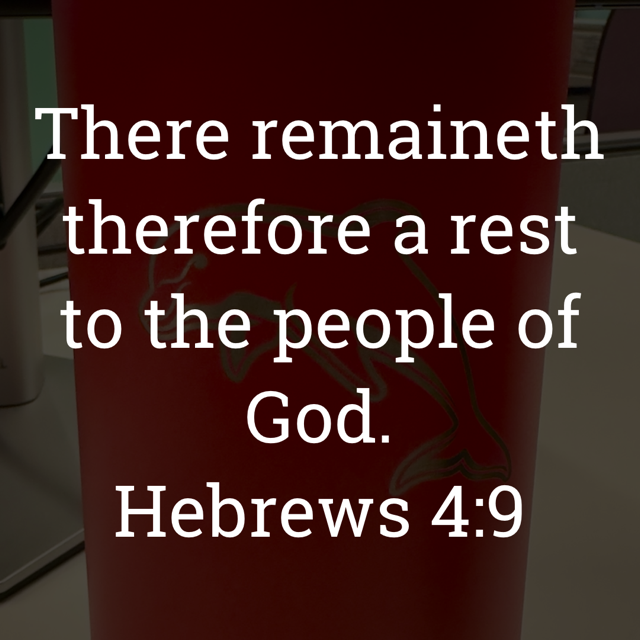
“There remaineth therefore a rest to the people of God.”
This short verse sits at the heart of the writer’s argument in Hebrews 3–4. It is both a theological anchor and a pastoral encouragement. The author has been warning his hearers not to harden their hearts as Israel did in the wilderness, and at the same time urging them to persevere in faith so that they may enter God’s promised rest.
2. Exegetical Commentary
2.1 The Flow of Hebrews 4
Hebrews 4[i] continues the argument begun in Hebrews 3, where the writer recalls Israel’s rebellion in the wilderness. The people who were delivered from Egypt did not enter the promised land because of unbelief. The writer quotes Psalm 95 to show that God’s promise of “rest” still stands.
Key verses include:
Hebrews 4:1 (KJV):
“Let us therefore fear, lest, a promise being left us of entering into his rest, any of you should seem to come short of it.”
Hebrews 4:6 (KJV):
“Seeing therefore it remaineth that some must enter therein, and they to whom it was first preached entered not in because of unbelief.”
The argument builds toward verse 9: God’s rest is still open. It has not been exhausted. It has not been withdrawn. It is still offered to the people of God.
2.2 The Meaning of “Rest”
The Greek word translated “rest” in Hebrews 4:9 is sabbatismos, a term used only here in the New Testament. It carries the sense of a Sabbath rest, a deep, God-given cessation from labour.
The writer has already spoken of:
- God’s rest at creation
Hebrews 4:4 (KJV):
“For he spake in a certain place of the seventh day on this wise, And God did rest the seventh day from all his works.” - Israel’s rest in the land
Hebrews 4:8 (KJV):
“For if Jesus had given them rest, then would he not afterward have spoken of another day.”
(“Jesus” here refers to Joshua.) - A future, eschatological rest
Hebrews 4:11 (KJV):
“Let us labour therefore to enter into that rest, lest any man fall after the same example of unbelief.”
Thus, the “rest” in Hebrews 4:9 is not merely physical relaxation. It is the final, eternal rest of God’s people, grounded in God’s own rest after creation, foreshadowed in the Sabbath command, and anticipated in the promised land.
It is the rest secured by Jesus Christ, our great High Priest.
2.3 The Logic of the Verse
The verse begins with “There remaineth therefore…”
This signals a conclusion drawn from the preceding argument.
Because:
- God’s promise still stands (Hebrews 4:1)
- Israel’s failure did not cancel the promise (Hebrews 4:6)
- Joshua did not give the final rest (Hebrews 4:8)
- God still speaks of “another day” (Hebrews 4:7)
Therefore, the promise of rest remains open.
This is a profoundly comforting truth. God has not closed the door. The rest is still available. It is not earned by works but entered by faith in Christ.
2.4 Christ and the Rest of God
The chapter ends by pointing us to Jesus Christ:
Hebrews 4:14 (KJV):
“Seeing then that we have a great high priest, that is passed into the heavens, Jesus the Son of God, let us hold fast our profession.”
The rest of God is inseparable from the person and work of Christ. He is the one who:
- completes the work of salvation
- grants access to God
- brings his people into the eternal Sabbath
In Christian theology, this rest is understood as the consummation of salvation, the final enjoyment of God in the new creation. It is the fulfilment of God’s covenant promise: “I will be your God, and you will be my people.”
3. Theological Themes
3.1 Perseverance of the Saints
Hebrews 4 emphasises perseverance. The rest is promised, but believers are urged to “labour” (Hebrews 4:11) and “hold fast” (Hebrews 4:14). This is not salvation by works; it is the outworking of genuine faith.
3.2 The Already and the Not Yet
Believers taste God’s rest now through Christ, but the fullness is future. This aligns with the Christian understanding of inaugurated eschatology.
3.3 The Sabbath as a Signpost
The weekly Sabbath points beyond itself to the eternal rest of God. Hebrews 4:9 affirms that the Sabbath principle is not abolished but fulfilled in Christ.
3.4 Christ as High Priest
The chapter ends with Christ’s priesthood, reminding us that entry into God’s rest is possible only through him.
4. Meditation Guide
4.1 Reflective Reading
Read Hebrews 4 slowly. Notice the repeated warnings and invitations. Let the weight of God’s promise settle in your heart.
4.2 Questions for Personal Reflection
- Where am I tempted to unbelief or hardness of heart?
- Do I treat God’s promise of rest as real and precious?
- How does the finished work of Christ give me confidence today?
- In what ways do I try to “earn” rest rather than receive it by faith?
4.3 Prayer Suggestions
- Thank God that his promise of rest still stands.
- Confess areas of unbelief or spiritual fatigue.
- Ask the Holy Spirit to strengthen your perseverance.
- Praise Jesus Christ, your great High Priest, who brings you into God’s rest.
4.4 Practical Application for Modern Christian Living
- Prioritise gathered worship as a weekly reminder of the eternal rest to come.
- Practise Sabbath rhythms of rest, reflection, and delight in God.
- Persevere in faith, especially when life feels like a wilderness.
- Encourage others who are weary or discouraged.
- Hold fast to Christ, remembering that he intercedes for you.
[i] Hebrews 4
King James Version
4 Let us therefore fear, lest, a promise being left us of entering into his rest, any of you should seem to come short of it.
2 For unto us was the gospel preached, as well as unto them: but the word preached did not profit them, not being mixed with faith in them that heard it.
3 For we which have believed do enter into rest, as he said, As I have sworn in my wrath, if they shall enter into my rest: although the works were finished from the foundation of the world.
4 For he spake in a certain place of the seventh day on this wise, And God did rest the seventh day from all his works.
5 And in this place again, If they shall enter into my rest.
6 Seeing therefore it remaineth that some must enter therein, and they to whom it was first preached entered not in because of unbelief:
7 Again, he limiteth a certain day, saying in David, To day, after so long a time; as it is said, To day if ye will hear his voice, harden not your hearts.
8 For if Jesus had given them rest, then would he not afterward have spoken of another day.
9 There remaineth therefore a rest to the people of God.
10 For he that is entered into his rest, he also hath ceased from his own works, as God did from his.
11 Let us labour therefore to enter into that rest, lest any man fall after the same example of unbelief.
12 For the word of God is quick, and powerful, and sharper than any twoedged sword, piercing even to the dividing asunder of soul and spirit, and of the joints and marrow, and is a discerner of the thoughts and intents of the heart.
13 Neither is there any creature that is not manifest in his sight: but all things are naked and opened unto the eyes of him with whom we have to do.
14 Seeing then that we have a great high priest, that is passed into the heavens, Jesus the Son of God, let us hold fast our profession.
15 For we have not an high priest which cannot be touched with the feeling of our infirmities; but was in all points tempted like as we are, yet without sin.
16 Let us therefore come boldly unto the throne of grace, that we may obtain mercy, and find grace to help in time of need.
Discover more from Daily bible verses
Subscribe to get the latest posts sent to your email.


You must be logged in to post a comment.