
Commentary on Proverbs 19:17
Text
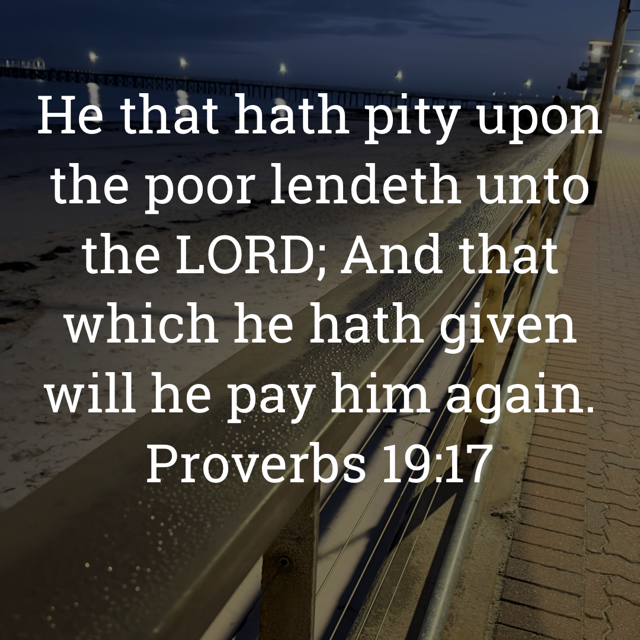
Proverbs 19:17 “He that hath pity upon the poor lendeth unto the LORD; and that which he hath given will he pay him again.”
1. Immediate Exegesis of Proverbs 19:17
The structure of the proverb
The verse contains three movements:
- The subject
“He that hath pity upon the poor” - The divine transaction
“lendeth unto the LORD” - The divine promise
“and that which he hath given will he pay him again”
The proverb presents an astonishing theological claim: mercy shown to the poor is treated by God as a loan made directly to Him. The Lord Himself becomes the guarantor of repayment.
Key terms
- “Hath pity”
The Hebrew term ḥānan conveys graciousness, compassion, and active kindness. It is not mere sentiment; it is mercy expressed in tangible action. - “Poor”
The Hebrew dal refers to one who is weak, vulnerable, or lacking resources. The focus is not only economic poverty but any form of human vulnerability. - “Lendeth unto the LORD”
This is metaphorical language. God does not need anything, yet He binds Himself to the giver by covenantal promise. - “Will he pay him again”
God Himself undertakes repayment. The repayment may not be financial; it may be spiritual, relational, or eschatological.
2. Context within Proverbs 19
Proverbs 19[i] contains several sayings about righteousness, wisdom, justice, and compassion. The chapter repeatedly contrasts the wise and the foolish, the righteous and the wicked, the generous and the selfish.
Relevant verses include:
Proverbs 19:1
“Better is the poor that walketh in his integrity than he that is perverse in his lips, and is a fool.” This verse elevates integrity above wealth, preparing the reader to value the poor rightly.
Proverbs 19:3
“The foolishness of man perverteth his way: and his heart fretteth against the LORD.” Human folly leads to ruin, but the wise recognise God’s sovereignty.
Proverbs 19:17
Our focus verse, which teaches that generosity is an act of faith in God’s justice.
Proverbs 19:22
“The desire of a man is his kindness: and a poor man is better than a liar.” Kindness is presented as a defining virtue, and again, the poor are honoured.
Proverbs 19:23
“The fear of the LORD tendeth to life: and he that hath it shall abide satisfied; he shall not be visited with evil.” Fear of the Lord produces life and security, which frames generosity as an expression of trust in God.
Together, these verses show that Proverbs 19 consistently elevates righteousness, compassion, and trust in God above wealth, status, or self-reliance.
3. Theological Themes
3.1 God’s identification with the poor
Proverbs 19:17 teaches that God so identifies with the vulnerable that kindness to them is kindness to Him. This echoes other biblical themes:
- Proverbs 14:31
“He that oppresseth the poor reproacheth his Maker: but he that honoureth him hath mercy on the poor.” To harm the poor is to insult God; to help them is to honour Him. - Matthew 25:40
“Inasmuch as ye have done it unto one of the least of these my brethren, ye have done it unto me.” Jesus identifies Himself with the needy.
3.2 God’s justice and reward
The proverb promises repayment. This is not prosperity teaching; it is covenantal assurance that God sees, remembers, and rewards righteousness.
- Hebrews 6:10
“For God is not unrighteous to forget your work and labour of love…” God’s justice includes remembering acts of mercy.
3.3 Mercy as evidence of faith
Generosity is not a work that earns salvation; it is fruit that flows from a heart transformed by grace.
- James 2:17
“Even so faith, if it hath not works, is dead, being alone.” Mercy is a natural expression of living faith.
3.4 Stewardship
Everything we have is entrusted to us by God. Giving to the poor is an act of stewardship, acknowledging that God owns all things.
4. Practical Application for Modern Christian Living
4.1 Cultivating a heart of compassion
Christians are called to see the vulnerable as God sees them. Compassion is not optional; it is a mark of discipleship. In a modern context, this includes:
- Supporting those experiencing homelessness
- Caring for refugees and asylum seekers
- Assisting single parents, the elderly, and those with disabilities
- Being generous with time, resources, and presence
4.2 Giving as worship
Proverbs 19:17 reframes generosity as worship. When we give, we are not merely helping a person; we are honouring God. This transforms giving from obligation to joyful devotion.
4.3 Trusting God with the outcome
The promise “he will pay him again” encourages believers to give without fear. God may repay through:
- Spiritual growth
- Increased contentment
- Deepened relationships
- Eternal reward
- Provision in unexpected ways
Christians are freed from anxiety because God Himself guarantees the outcome.
4.4 Guarding against self-righteousness
Generosity must never become a means of self-promotion. The proverb emphasises mercy, not performance. True generosity is quiet, humble, and motivated by love.
4.5 Encouraging the church community
Churches should cultivate cultures of generosity, ensuring that no one among them is left in need. This reflects the early church:
- Acts 4:34
“Neither was there any among them that lacked…”
Generosity strengthens fellowship and displays the gospel to the world.
5. Meditation Guide
Step 1: Read the verse slowly
“He that hath pity upon the poor lendeth unto the LORD; and that which he hath given will he pay him again.”
Let the weight of each phrase settle in your heart.
Step 2: Reflect on God’s heart
Consider how deeply God identifies with the vulnerable. Ask:
- How does my view of the poor align with God’s view?
Step 3: Examine your own life
Ask:
- Where is God calling me to show mercy?
- Are there people I overlook or avoid?
- Do I give freely, or do I hold back out of fear?
Step 4: Pray for transformation
Pray for a heart shaped by Christ’s compassion. Ask God to make generosity a natural expression of your faith.
Step 5: Act
Choose one concrete act of mercy this week. Let it be quiet, humble, and done unto the Lord.
[i] Proverbs 19
King James Version
19 Better is the poor that walketh in his integrity, than he that is perverse in his lips, and is a fool.
2 Also, that the soul be without knowledge, it is not good; and he that hasteth with his feet sinneth.
3 The foolishness of man perverteth his way: and his heart fretteth against the LORD.
4 Wealth maketh many friends; but the poor is separated from his neighbour.
5 A false witness shall not be unpunished, and he that speaketh lies shall not escape.
6 Many will intreat the favour of the prince: and every man is a friend to him that giveth gifts.
7 All the brethren of the poor do hate him: how much more do his friends go far from him? he pursueth them with words, yet they are wanting to him.
8 He that getteth wisdom loveth his own soul: he that keepeth understanding shall find good.
9 A false witness shall not be unpunished, and he that speaketh lies shall perish.
10 Delight is not seemly for a fool; much less for a servant to have rule over princes.
11 The discretion of a man deferreth his anger; and it is his glory to pass over a transgression.
12 The king’s wrath is as the roaring of a lion; but his favour is as dew upon the grass.
13 A foolish son is the calamity of his father: and the contentions of a wife are a continual dropping.
14 House and riches are the inheritance of fathers: and a prudent wife is from the LORD.
15 Slothfulness casteth into a deep sleep; and an idle soul shall suffer hunger.
16 He that keepeth the commandment keepeth his own soul; but he that despiseth his ways shall die.
17 He that hath pity upon the poor lendeth unto the LORD; and that which he hath given will he pay him again.
18 Chasten thy son while there is hope, and let not thy soul spare for his crying.
19 A man of great wrath shall suffer punishment: for if thou deliver him, yet thou must do it again.
20 Hear counsel, and receive instruction, that thou mayest be wise in thy latter end.
21 There are many devices in a man’s heart; nevertheless the counsel of the LORD, that shall stand.
22 The desire of a man is his kindness: and a poor man is better than a liar.
23 The fear of the LORD tendeth to life: and he that hath it shall abide satisfied; he shall not be visited with evil.
24 A slothful man hideth his hand in his bosom, and will not so much as bring it to his mouth again.
25 Smite a scorner, and the simple will beware: and reprove one that hath understanding, and he will understand knowledge.
26 He that wasteth his father, and chaseth away his mother, is a son that causeth shame, and bringeth reproach.
27 Cease, my son, to hear the instruction that causeth to err from the words of knowledge.
28 An ungodly witness scorneth judgment: and the mouth of the wicked devoureth iniquity.
29 Judgments are prepared for scorners, and stripes for the back of fools.
Discover more from Daily bible verses
Subscribe to get the latest posts sent to your email.


You must be logged in to post a comment.