
Commentary on Proverbs 18:10
Text (King James Version):
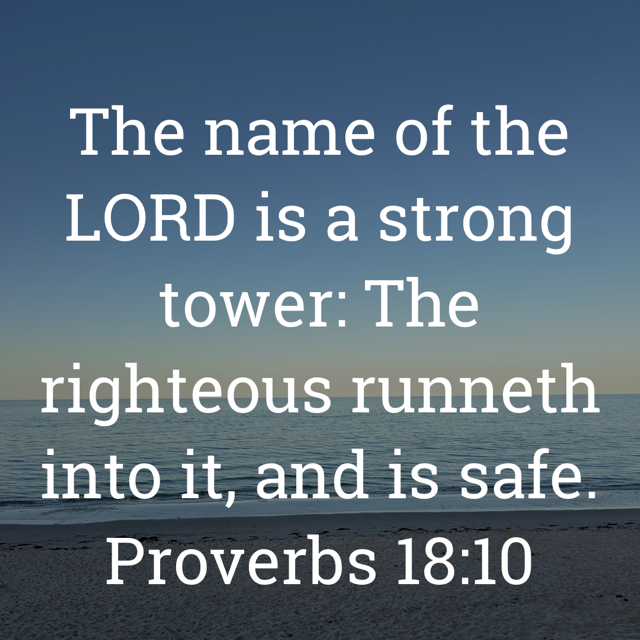
“The name of the Lord is a strong tower: the righteous runneth into it, and is safe.” (Proverbs 18:10)
1. Setting Proverbs 18:10 in Its Biblical Context
Proverbs 18[i] belongs to a collection of Solomon’s sayings that contrast wisdom and folly, righteousness and wickedness, humility and pride. The chapter repeatedly highlights the power of words, the danger of pride, the value of humility, and the security found in God rather than human strength.
A few relevant verses from the same chapter help frame verse 10:
- Proverbs 18:2
“A fool hath no delight in understanding, but that his heart may discover itself.”
This verse shows the self-centredness of folly, which stands in contrast to the God-centred refuge described in verse 10. - Proverbs 18:12
“Before destruction the heart of man is haughty, and before honour is humility.”
The humble heart runs to the Lord for safety; the proud heart trusts in itself. - Proverbs 18:21
“Death and life are in the power of the tongue: and they that love it shall eat the fruit thereof.”
The Lord’s name—His revealed character—is the ultimate life-giving word.
Proverbs 18:10 stands as a declaration of divine security in a chapter full of warnings about human frailty.
2. Exegetical Insights
2.1 “The name of the Lord”
In Scripture, the “name” of the Lord refers not merely to a label but to His revealed character, His covenant faithfulness, His holiness, His mercy, His power, and His saving acts.
Examples include:
- Exodus 34:6–7
“And the Lord passed by before him, and proclaimed, The Lord, The Lord God, merciful and gracious, longsuffering, and abundant in goodness and truth, Keeping mercy for thousands, forgiving iniquity and transgression and sin…”
God’s name is His character proclaimed. - Psalm 20:7
“Some trust in chariots, and some in horses: but we will remember the name of the Lord our God.”
The name of the Lord is the believer’s trust.
Thus, Proverbs 18:10 is not about a mystical formula but about the reality of who God is.
2.2 “Is a strong tower”
In the ancient world, a strong tower was a place of defence, height, and safety. It symbolised:
- Protection from enemies
- A vantage point to see danger
- A secure refuge when all else failed
The metaphor teaches that God Himself is the believer’s ultimate security. Not wealth, not reputation, not human strength.
This is reinforced by the contrast in the next verse:
- Proverbs 18:11
“The rich man’s wealth is his strong city, and as an high wall in his own conceit.”
Wealth gives an illusion of safety; God gives real safety.
2.3 “The righteous runneth into it”
The righteous are not sinless people but those who trust in the Lord, who walk in His ways, and who seek His mercy. Running implies urgency, dependence, and intentionality.
This is not passive trust. It is active reliance.
2.4 “And is safe”
The Hebrew word carries the sense of being lifted up, set on high, out of reach of danger. God does not merely comfort; He rescues and secures.
3. Theological Teaching
3.1 God as Refuge
Throughout Scripture, God reveals Himself as the refuge of His people:
- Psalm 46:1
“God is our refuge and strength, a very present help in trouble.” - Nahum 1:7
“The Lord is good, a strong hold in the day of trouble; and he knoweth them that trust in him.”
This aligns with Christian theology’s emphasis on God’s sovereignty and covenant faithfulness. Salvation and security are found in God alone.
3.2 Christ as the Fulfilment
For the Christian, the name of the Lord finds its fullest expression in Jesus Christ:
- Acts 4:12
“Neither is there salvation in any other: for there is none other name under heaven given among men, whereby we must be saved.”
Christ is the strong tower. He is the refuge for sinners, the protector of His people, and the one who intercedes for them.
3.3 The Righteous by Faith
Christian theology teaches that righteousness is not earned but received by faith:
- Romans 1:17
“The just shall live by faith.”
Thus, those who “run” to the Lord are those who trust in Christ alone for salvation and daily strength.
4. Application to Modern Christian Living
4.1 When anxiety rises
Instead of running to distraction, self-reliance, or material security, believers are called to run to God in prayer, Scripture, and fellowship.
4.2 When temptation strikes
The strong tower is not merely comfort but protection. Running to the Lord means seeking His strength to resist sin.
4.3 When suffering comes
God does not promise the absence of trouble but the presence of refuge. Christians can rest in His character even when circumstances are painful.
4.4 When pride whispers
Proverbs 18 warns repeatedly against pride. Running to the Lord is an act of humility, acknowledging our need.
4.5 When sharing the gospel
We point others not to our wisdom or goodness but to the name of the Lord—His character revealed in Jesus Christ.
5. Meditation Guide
Reflect
- What “towers” do you instinctively run to—wealth, reputation, control, comfort?
- How does the character of God speak into your current fears or pressures?
Pray
- Thank God for His unchanging character.
- Confess the false refuges you rely on.
- Ask for grace to run to Him quickly and wholeheartedly.
Act
- Memorise Proverbs 18:10.
- When anxiety or temptation arises this week, pause and pray using the attributes of God revealed in Scripture.
- Share with a trusted Christian friend how you are learning to run to the Lord.
[i] Proverbs 18
King James Version
18 Through desire a man, having separated himself, seeketh and intermeddleth with all wisdom.
2 A fool hath no delight in understanding, but that his heart may discover itself.
3 When the wicked cometh, then cometh also contempt, and with ignominy reproach.
4 The words of a man’s mouth are as deep waters, and the wellspring of wisdom as a flowing brook.
5 It is not good to accept the person of the wicked, to overthrow the righteous in judgment.
6 A fool’s lips enter into contention, and his mouth calleth for strokes.
7 A fool’s mouth is his destruction, and his lips are the snare of his soul.
8 The words of a talebearer are as wounds, and they go down into the innermost parts of the belly.
9 He also that is slothful in his work is brother to him that is a great waster.
10 The name of the Lord is a strong tower: the righteous runneth into it, and is safe.
11 The rich man’s wealth is his strong city, and as an high wall in his own conceit.
12 Before destruction the heart of man is haughty, and before honour is humility.
13 He that answereth a matter before he heareth it, it is folly and shame unto him.
14 The spirit of a man will sustain his infirmity; but a wounded spirit who can bear?
15 The heart of the prudent getteth knowledge; and the ear of the wise seeketh knowledge.
16 A man’s gift maketh room for him, and bringeth him before great men.
17 He that is first in his own cause seemeth just; but his neighbour cometh and searcheth him.
18 The lot causeth contentions to cease, and parteth between the mighty.
19 A brother offended is harder to be won than a strong city: and their contentions are like the bars of a castle.
20 A man’s belly shall be satisfied with the fruit of his mouth; and with the increase of his lips shall he be filled.
21 Death and life are in the power of the tongue: and they that love it shall eat the fruit thereof.
22 Whoso findeth a wife findeth a good thing, and obtaineth favour of the Lord.
23 The poor useth intreaties; but the rich answereth roughly.
24 A man that hath friends must shew himself friendly: and there is a friend that sticketh closer than a brother.
Discover more from Daily bible verses
Subscribe to get the latest posts sent to your email.


You must be logged in to post a comment.