
Commentary on 1 John 3:16
1. The Text
1 John 3:16 (King James Version):
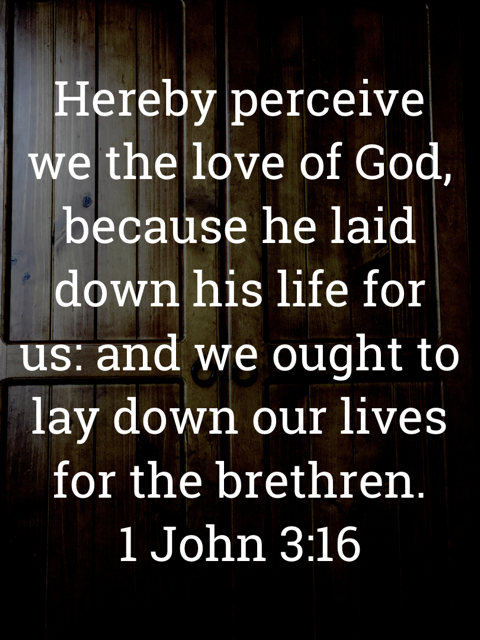
“Hereby perceive we the love of God, because he laid down his life for us: and we ought to lay down our lives for the brethren.”
This single verse stands at the heart of the Apostle John’s teaching on love. It is both a declaration of the gospel and a summons to Christian discipleship.
2. Exegetical Commentary
2.1 The Context of 1 John 3
John’s first letter is written to assure believers of their salvation, to guard them against false teaching, and to call them to a life shaped by the character of God. Chapter 3[i] focuses on the contrast between the children of God and the children of the devil, expressed most clearly in how they love.
1 John 3:1 (KJV):
“Behold, what manner of love the Father hath bestowed upon us, that we should be called the sons of God…”
John begins with wonder. The Father’s love is not abstract; it is bestowed, given, and made visible in adoption. This sets the tone for the whole chapter: God’s love is active, concrete, and transformative.
Later, John contrasts love with hatred:
1 John 3:14–15 (KJV):
“We know that we have passed from death unto life, because we love the brethren. He that loveth not his brother abideth in death.
Whosoever hateth his brother is a murderer: and ye know that no murderer hath eternal life abiding in him.”
Love is not optional. It is the evidence of new birth.
Into this context, John places verse 16 as the supreme example of love.
2.2 “Hereby perceive we the love of God”
The verb “perceive” means to know by experience, to recognise, to grasp. John is not speaking of a vague feeling but of a concrete revelation. God’s love is not discovered by introspection or speculation. It is revealed in history, in the person and work of Jesus Christ.
This aligns with Christian theology’s insistence that God’s saving love is known only through God’s self-disclosure in Christ and Scripture.
2.3 “Because he laid down his life for us”
John refers to the atoning death of Jesus Christ. The phrase “laid down his life” echoes Jesus’ own words:
John 10:11 (KJV):
“I am the good shepherd: the good shepherd giveth his life for the sheep.”
This is voluntary, substitutionary, sacrificial love. Christ’s death is not merely an example; it is the foundation of salvation. He died for us—in our place, for our sins, to reconcile us to God.
Christian theology rightly emphasises that Christ’s death is the decisive act of divine love, accomplishing redemption for His people.
2.4 “And we ought to lay down our lives for the brethren”
The word “ought” carries moral obligation. Because Christ has loved us in this way, we are now called to love others in a similar manner.
John is not necessarily calling every believer to martyrdom, though that may be required. Rather, he is calling us to a pattern of self-giving love that mirrors Christ’s own.
He immediately clarifies what this looks like:
1 John 3:17–18 (KJV):
“But whoso hath this world’s good, and seeth his brother have need, and shutteth up his bowels of compassion from him, how dwelleth the love of God in him?
My little children, let us not love in word, neither in tongue; but in deed and in truth.”
Love is practical. It meets needs. It costs something. It is not merely spoken; it is lived.
3. Theological Themes
3.1 Love Defined by the Cross
John does not allow us to define love by sentiment or cultural norms. Love is defined by Christ’s atoning sacrifice. This guards the church against reducing love to niceness or tolerance. True love is costly, purposeful, and grounded in truth.
3.2 Assurance Through Love
John teaches that love for fellow believers is evidence of new birth. This is not salvation by works; it is the fruit of regeneration. The Spirit who unites us to Christ also conforms us to His likeness.
3.3 The Ethical Shape of the Gospel
The gospel is not only something to believe; it is something to embody. Christ’s self-giving love becomes the pattern for Christian living. This is sanctification in action.
4. Application to Modern Christian Living
4.1 Love That Costs Something
In a culture that prizes convenience and self-protection, John calls us to sacrificial love. This may mean:
- giving time to someone who is lonely
- offering financial help to a believer in need
- forgiving someone who has wronged us
- choosing patience when irritated
- serving in unnoticed ways
Love is not measured by intensity of feeling but by willingness to act.
4.2 Love Within the Church
John’s focus is “the brethren”—fellow believers. In an age of church consumerism, this reminds us that Christian community is not optional. We are called to belong, to serve, to bear burdens, and to persevere with one another.
4.3 Love That Points to Christ
Our love is not the source of salvation but a signpost to the One who loved us first. When Christians love sacrificially, the world sees a glimpse of the gospel.
5. Meditation Guide
Use these steps for personal devotion or group reflection.
5.1 Read Slowly
Read 1 John 3:16 aloud several times. Let each phrase settle.
“Hereby perceive we the love of God, because he laid down his life for us: and we ought to lay down our lives for the brethren.”
5.2 Reflect on Christ’s Love
Ask:
- What does it mean that Jesus laid down His life for me?
- How does this shape my understanding of God’s love?
Consider also 1 John 4:10:
1 John 4:10 (KJV):
“Herein is love, not that we loved God, but that he loved us, and sent his Son to be the propitiation for our sins.”
5.3 Examine Your Heart
Ask:
- Where am I withholding love from others?
- What fears or selfish desires keep me from sacrificial love?
Pray for the Spirit’s transforming work.
5.4 Commit to One Act of Costly Love
Choose one concrete way to love a brother or sister this week. Make it specific, practical, and sacrificial.
5.5 Give Thanks
Thank God for the love revealed in Christ. Praise Him for adopting you as His child.
[i] 1 John 3
King James Version
3 Behold, what manner of love the Father hath bestowed upon us, that we should be called the sons of God: therefore the world knoweth us not, because it knew him not.
2 Beloved, now are we the sons of God, and it doth not yet appear what we shall be: but we know that, when he shall appear, we shall be like him; for we shall see him as he is.
3 And every man that hath this hope in him purifieth himself, even as he is pure.
4 Whosoever committeth sin transgresseth also the law: for sin is the transgression of the law.
5 And ye know that he was manifested to take away our sins; and in him is no sin.
6 Whosoever abideth in him sinneth not: whosoever sinneth hath not seen him, neither known him.
7 Little children, let no man deceive you: he that doeth righteousness is righteous, even as he is righteous.
8 He that committeth sin is of the devil; for the devil sinneth from the beginning. For this purpose the Son of God was manifested, that he might destroy the works of the devil.
9 Whosoever is born of God doth not commit sin; for his seed remaineth in him: and he cannot sin, because he is born of God.
10 In this the children of God are manifest, and the children of the devil: whosoever doeth not righteousness is not of God, neither he that loveth not his brother.
11 For this is the message that ye heard from the beginning, that we should love one another.
12 Not as Cain, who was of that wicked one, and slew his brother. And wherefore slew he him? Because his own works were evil, and his brother’s righteous.
13 Marvel not, my brethren, if the world hate you.
14 We know that we have passed from death unto life, because we love the brethren. He that loveth not his brother abideth in death.
15 Whosoever hateth his brother is a murderer: and ye know that no murderer hath eternal life abiding in him.
16 Hereby perceive we the love of God, because he laid down his life for us: and we ought to lay down our lives for the brethren.
17 But whoso hath this world’s good, and seeth his brother have need, and shutteth up his bowels of compassion from him, how dwelleth the love of God in him?
18 My little children, let us not love in word, neither in tongue; but in deed and in truth.
19 And hereby we know that we are of the truth, and shall assure our hearts before him.
20 For if our heart condemn us, God is greater than our heart, and knoweth all things.
21 Beloved, if our heart condemn us not, then have we confidence toward God.
22 And whatsoever we ask, we receive of him, because we keep his commandments, and do those things that are pleasing in his sight.
23 And this is his commandment, That we should believe on the name of his Son Jesus Christ, and love one another, as he gave us commandment.
24 And he that keepeth his commandments dwelleth in him, and he in him. And hereby we know that he abideth in us, by the Spirit which he hath given us.
Discover more from Daily bible verses
Subscribe to get the latest posts sent to your email.


You must be logged in to post a comment.