
Commentary on 2 Corinthians 3:17
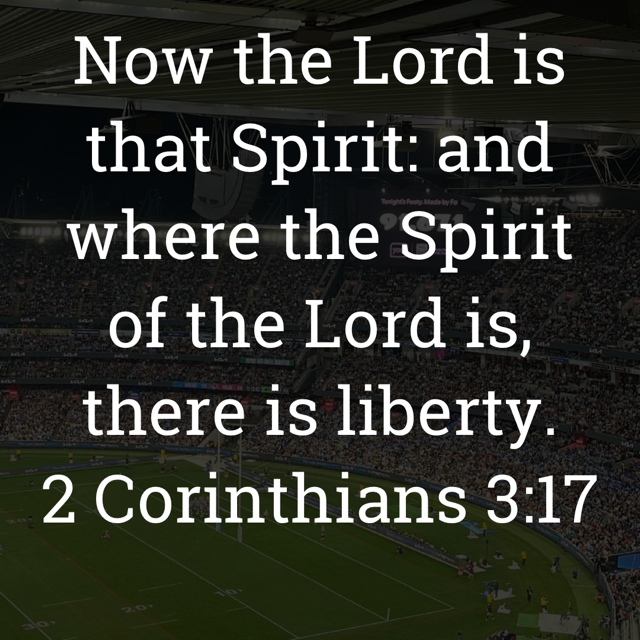
2 Corinthians 3:17 “Now the Lord is that Spirit: and where the Spirit of the Lord is, there is liberty.”
Concise takeaway
Paul teaches that the presence and work of the Holy Spirit bring true spiritual freedom—freedom from the condemnation of the law, freedom to behold Christ with unveiled hearts, and freedom to be transformed into His likeness. This liberty is not autonomy but life under the gracious rule of Christ.
1. Exegetical Commentary
✦ Literary and theological context: 2 Corinthians 3[i]
Paul contrasts two ministries:
- The ministry of the old covenant
written on stone, characterised by condemnation and fading glory.
2 Corinthians 3:7 “But if the ministration of death, written and engraven in stones, was glorious… which glory was to be done away.”
- The ministry of the new covenant
written on hearts by the Spirit, characterised by righteousness and surpassing glory.
2 Corinthians 3:8–9 “How shall not the ministration of the spirit be rather glorious? For if the ministration of condemnation be glory, much more doth the ministration of righteousness exceed in glory.”
Paul’s argument builds to the climactic statement in verse 17: the Spirit’s presence brings liberty.
✦ “The Lord is that Spirit”
Paul is not collapsing the persons of the Trinity. Rather, he is affirming:
- The Lord Jesus Christ is present and active through the Holy Spirit.
- The Spirit mediates Christ’s new covenant work.
- The Spirit brings believers into living fellowship with the risen Lord.
This aligns with other New Testament teaching:
Romans 8:9 “But ye are not in the flesh, but in the Spirit… Now if any man have not the Spirit of Christ, he is none of his.”
✦ “Where the Spirit of the Lord is, there is liberty”
Paul’s “liberty” is not political freedom or personal self-expression. It is spiritual liberation from:
- The veil of hardness
that blinds the heart (2 Corinthians 3:14–15). - The condemnation of the law
, which exposes sin but cannot give life (2 Corinthians 3:7, 9). - The fading glory
of the old covenant, replaced by the permanent glory of Christ (2 Corinthians 3:11).
This liberty is freedom to behold Christ and to be transformed:
2 Corinthians 3:18 “But we all, with open face beholding as in a glass the glory of the Lord, are changed into the same image… even as by the Spirit of the Lord.”
Thus, liberty is not independence from God but freedom for obedience, worship, and transformation.
✦ Christian theological themes
- The Spirit applies the work of Christ
The liberty Paul describes is grounded in Christ’s finished work and applied by the Spirit. This reflects the Christian emphasis on the Spirit’s role in regeneration, illumination, and sanctification. - The law’s condemning function remains, but its curse is removed
Believers are freed from the law as a covenant of works, not from the moral law as a guide for life. - Sanctification is Spirit-driven transformation
The Spirit frees believers from sin’s dominion and conforms them to Christ.
2. Meditation Guide for Christian Living
✦ Meditation 1: Freedom from condemnation
Reflect on the contrast between the “ministration of death” and the “ministration of righteousness.” Ask:
- Do I still live as though God’s acceptance depends on my performance?
- Do I rest in the righteousness of Christ alone?
Let the Spirit lead you into the liberty of assurance.
✦ Meditation 2: Freedom to behold Christ
Paul says we behold the Lord “with open face.” Consider:
- What veils my heart—pride, fear, self-reliance, distraction?
- How does the Spirit use Scripture, prayer, and worship to unveil Christ to me?
Pray for the Spirit’s unveiling work.
✦ Meditation 3: Freedom for transformation
The Spirit does not merely free us from something but frees us for something: Christlikeness.
- Where is the Spirit prompting growth in holiness?
- What habits, patterns, or sins resist His transforming work?
Invite the Spirit to shape your desires, not just your behaviour.
✦ Meditation 4: Liberty in community
The liberty of the Spirit is not individualistic.
- How does my freedom serve others?
- Do I use liberty to build up the church or to assert my preferences?
Pray for a heart that uses freedom in love.
3. Practical Application for Modern Christian Living
✦ 1. Live confidently in the gospel
The Spirit frees believers from the crushing weight of self-justification. This produces:
- Humility rather than pride
- Assurance rather than anxiety
- Joy rather than fear
✦ 2. Pursue holiness as Spirit-empowered transformation
Christian growth is not self-improvement but Spirit-driven renewal. Practices that cultivate openness to the Spirit include:
- Regular Scripture meditation
- Honest confession
- Dependence on prayer
- Participation in the life of the church
✦ 3. Resist counterfeit freedoms
Modern culture equates freedom with autonomy. Paul defines freedom as life under the lordship of Christ.
True liberty is:
- Freedom from sin, not freedom to sin
- Freedom to obey, not freedom from obedience
- Freedom to love, not freedom to indulge self
✦ 4. Embrace the Spirit’s ministry in weakness
Paul writes 2 Corinthians from a place of vulnerability. The Spirit’s liberty includes:
- Freedom from pretending
- Freedom to be weak
- Freedom to rely on God’s power rather than our own
This is deeply countercultural and deeply liberating.
[i] 2 Corinthians 3
King James Version
3 Do we begin again to commend ourselves? or need we, as some others, epistles of commendation to you, or letters of commendation from you?
2 Ye are our epistle written in our hearts, known and read of all men:
3 Forasmuch as ye are manifestly declared to be the epistle of Christ ministered by us, written not with ink, but with the Spirit of the living God; not in tables of stone, but in fleshy tables of the heart.
4 And such trust have we through Christ to God-ward:
5 Not that we are sufficient of ourselves to think any thing as of ourselves; but our sufficiency is of God;
6 Who also hath made us able ministers of the new testament; not of the letter, but of the spirit: for the letter killeth, but the spirit giveth life.
7 But if the ministration of death, written and engraven in stones, was glorious, so that the children of Israel could not stedfastly behold the face of Moses for the glory of his countenance; which glory was to be done away:
8 How shall not the ministration of the spirit be rather glorious?
9 For if the ministration of condemnation be glory, much more doth the ministration of righteousness exceed in glory.
10 For even that which was made glorious had no glory in this respect, by reason of the glory that excelleth.
11 For if that which is done away was glorious, much more that which remaineth is glorious.
12 Seeing then that we have such hope, we use great plainness of speech:
13 And not as Moses, which put a veil over his face, that the children of Israel could not stedfastly look to the end of that which is abolished:
14 But their minds were blinded: for until this day remaineth the same vail untaken away in the reading of the old testament; which vail is done away in Christ.
15 But even unto this day, when Moses is read, the vail is upon their heart.
16 Nevertheless when it shall turn to the Lord, the vail shall be taken away.
17 Now the Lord is that Spirit: and where the Spirit of the Lord is, there is liberty.
18 But we all, with open face beholding as in a glass the glory of the Lord, are changed into the same image from glory to glory, even as by the Spirit of the Lord.
Discover more from Daily bible verses
Subscribe to get the latest posts sent to your email.


You must be logged in to post a comment.