
Commentary on 1 John 1:9
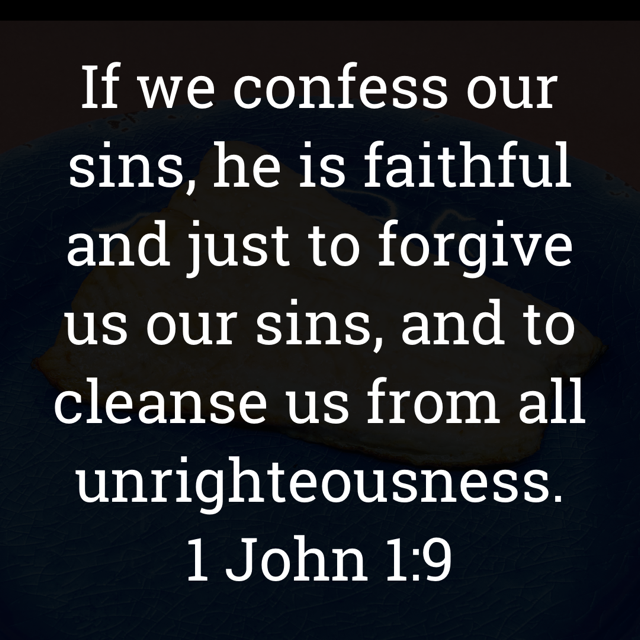
1 John 1:9 (King James Version): “If we confess our sins, he is faithful and just to forgive us our sins, and to cleanse us from all unrighteousness.”
1. Concise Takeaway
The apostle John teaches that ongoing confession is the mark of genuine Christian fellowship with God, and that God responds with certain forgiveness and real cleansing, grounded in his faithfulness, justice, and the atoning work of Jesus Christ.
2. Exegetical Commentary
✦ The flow of thought in 1 John 1[i]
John writes to assure believers of true fellowship with God and to expose false claims about sin and holiness. The chapter moves through three false claims:
- “We have fellowship with him” while walking in darkness (1 John 1:6). 1 John 1:6 (KJV): “If we say that we have fellowship with him, and walk in darkness, we lie, and do not the truth.”
- “We have no sin” (1 John 1:8). 1 John 1:8 (KJV): “If we say that we have no sin, we deceive ourselves, and the truth is not in us.”
- “We have not sinned” (1 John 1:10). 1 John 1:10 (KJV): “If we say that we have not sinned, we make him a liar, and his word is not in us.”
Against these claims, John presents the true Christian posture: walking in the light, acknowledging sin, and receiving cleansing through Christ’s blood.
✦ “If we confess our sins”
The verb “confess” means “to say the same thing,” that is, to agree with God’s verdict about our sin. Confession is not merely admitting wrongdoing; it is aligning our assessment with God’s holy standard.
Confession in John’s context is ongoing, not a one‑off event. It is the rhythm of a life lived in the light.
✦ “He is faithful and just”
This is the theological heart of the verse.
- Faithful
God keeps his covenant promises. He does not change his posture toward his people. - Just
God forgives on a righteous basis. He does not overlook sin; he deals with it through the atoning sacrifice of Jesus Christ.
John expands this in the next verse: 1 John 2:1–2 (KJV): “And if any man sin, we have an advocate with the Father, Jesus Christ the righteous: And he is the propitiation for our sins: and not for ours only, but also for the sins of the whole world.”
Forgiveness is not sentimental. It is grounded in the finished work of Christ.
✦ “To forgive us our sins”
Forgiveness is the removal of guilt and the restoration of fellowship. John assumes that believers still sin, but he also assumes that God stands ready to forgive.
✦ “And to cleanse us from all unrighteousness”
Forgiveness addresses guilt; cleansing addresses pollution. This cleansing is both:
- positional
(we are made clean in Christ), and - ongoing
(the Spirit progressively purifies us).
John has already said: 1 John 1:7 (KJV): “The blood of Jesus Christ his Son cleanseth us from all sin.”
The cleansing is comprehensive: “all unrighteousness.”
3. Theological Teaching
✦ 1. The reality of ongoing sin in the believer
John rejects perfectionism. Christians still sin, but they do not deny it. Confession is a mark of spiritual maturity, not immaturity.
✦ 2. The character of God as the foundation of assurance
Forgiveness rests not on the strength of our confession but on the faithfulness and justice of God. This is deeply Christian: assurance is grounded in God’s unchanging character and Christ’s finished work.
✦ 3. The atonement as the basis of forgiveness
God is “just” to forgive because Christ has borne the penalty. Forgiveness is not God relaxing his standards; it is God applying Christ’s righteousness to us.
✦ 4. Sanctification as cleansing
Cleansing is not optional. The God who forgives also purifies. Confession is part of the Spirit’s sanctifying work, leading us into deeper holiness.
4. Meditation Guide for Modern Christian Living
✦ A. Reflection
- Where am I tempted to deny or minimise sin?
- Do I treat confession as a burden or as a gift?
- Do I trust God’s character more than my feelings of guilt or shame?
✦ B. Prayer
- Thank God for his faithfulness and justice.
- Confess specific sins, naming them honestly before God.
- Ask for renewed cleansing and a deeper hatred of sin.
✦ C. Practice
- Build a daily rhythm of confession, perhaps linked to morning or evening prayer.
- Seek accountability with a trusted Christian friend or elder.
- When you sin, run to God immediately, not after you “feel better.”
✦ D. Encouragement
God does not forgive reluctantly. He forgives because he has bound himself to his people through Christ. Confession is not grovelling; it is stepping back into the light where Christ already stands.
[i] 1 John 1
King James Version
1 That which was from the beginning, which we have heard, which we have seen with our eyes, which we have looked upon, and our hands have handled, of the Word of life;
2 (For the life was manifested, and we have seen it, and bear witness, and shew unto you that eternal life, which was with the Father, and was manifested unto us;)
3 That which we have seen and heard declare we unto you, that ye also may have fellowship with us: and truly our fellowship is with the Father, and with his Son Jesus Christ.
4 And these things write we unto you, that your joy may be full.
5 This then is the message which we have heard of him, and declare unto you, that God is light, and in him is no darkness at all.
6 If we say that we have fellowship with him, and walk in darkness, we lie, and do not the truth:
7 But if we walk in the light, as he is in the light, we have fellowship one with another, and the blood of Jesus Christ his Son cleanseth us from all sin.
8 If we say that we have no sin, we deceive ourselves, and the truth is not in us.
9 If we confess our sins, he is faithful and just to forgive us our sins, and to cleanse us from all unrighteousness.
10 If we say that we have not sinned, we make him a liar, and his word is not in us.
Discover more from Daily bible verses
Subscribe to get the latest posts sent to your email.


You must be logged in to post a comment.