
Commentary on 2 Corinthians 5:18
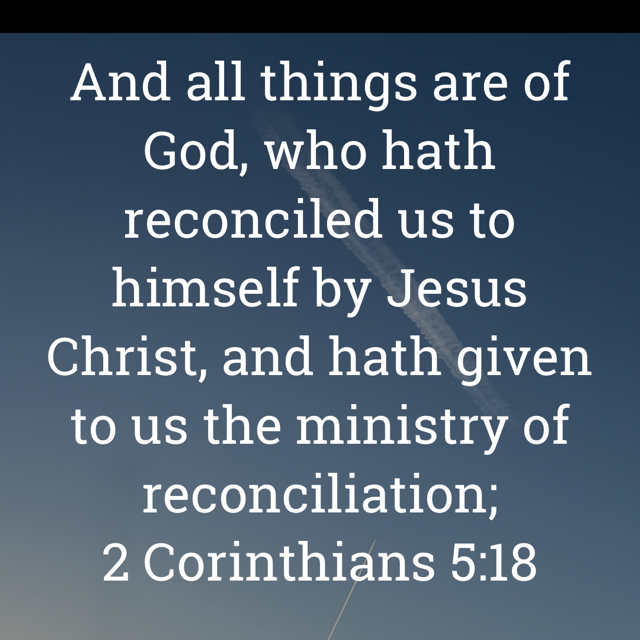
“And all things are of God, who hath reconciled us to himself by Jesus Christ, and hath given to us the ministry of reconciliation.”
2 Corinthians 5:18, King James Version
1. Concise Takeaway
Paul teaches that reconciliation is entirely God’s work, accomplished through Jesus Christ, and entrusted to believers as a continuing ministry. This verse anchors Christian identity, mission, and daily practice in God’s initiative, grace, and purpose.
2. Exegetical Commentary
2.1 The flow of thought in 2 Corinthians 5
Paul’s argument in 2 Corinthians 5[i] builds around several major themes:
- The hope of resurrection (verses 1 to 10)
“For we must all appear before the judgment seat of Christ…” (verse 10).
The Christian life is lived in light of eternity. - The controlling love of Christ (verse 14)
“For the love of Christ constraineth us…”
Christ’s love compels a transformed life. - The new creation (verse 17)
“Therefore if any man be in Christ, he is a new creature…”
Salvation is not cosmetic; it is re‑creative. - Reconciliation as God’s initiative (verses 18 to 21)
God acts first, God provides the means, and God commissions the message.
Verse 18 sits at the centre of this movement, explaining the source, means, and purpose of reconciliation.
2.2 Phrase‑by‑phrase exposition of 2 Corinthians 5:18
“And all things are of God”
Paul emphasises the absolute divine initiative.
The “all things” refers especially to the new creation and the reconciling work described in verses 17 to 21.
Nothing about salvation originates in human effort, moral striving, or religious performance.
It is grounded in God’s eternal purpose and enacted by his sovereign grace.
This echoes other passages:
- Ephesians 2:8–9: “For by grace are ye saved through faith… not of works…”
- Romans 11:36: “For of him, and through him, and to him, are all things…”
“who hath reconciled us to himself”
Reconciliation assumes estrangement.
Humanity is alienated from God because of sin.
God does not merely offer a truce; he restores relationship.
The verb is past tense: reconciliation is an accomplished fact for those in Christ.
Paul’s language is relational, not merely legal.
God does not simply cancel a debt; he brings enemies into fellowship.
“by Jesus Christ”
Christ is the mediator, the means, and the substance of reconciliation.
His life, death, and resurrection are the means by which God restores sinners.
Verse 21 expands this:
“For he hath made him to be sin for us, who knew no sin; that we might be made the righteousness of God in him.”
Reconciliation is not sentimental; it is costly.
It required the substitutionary sacrifice of the sinless Son.
“and hath given to us the ministry of reconciliation”
The reconciled become reconcilers.
Paul speaks first of himself and his apostolic team, but the wider context of the new creation (verse 17) and the ambassadorial role (verse 20) shows that this ministry belongs to the whole church.
The ministry includes:
- Proclamation: declaring the gospel of Christ.
- Appeal: “we pray you in Christ’s stead, be ye reconciled to God” (verse 20).
- Embodiment: living as those who have been reconciled.
This ministry is not optional; it is inherent to Christian identity.
3. Theological Teaching
3.1 God is the author of reconciliation
Reconciliation is not a human achievement.
It is God’s gracious initiative.
This guards against pride and grounds assurance.
3.2 Christ is the mediator of reconciliation
There is no reconciliation apart from Jesus Christ.
This affirms the exclusivity of Christ and the necessity of the cross.
3.3 The church is entrusted with the ministry of reconciliation
The church does not invent its mission; it receives it.
The gospel is not a private comfort but a public commission.
3.4 Reconciliation is both vertical and horizontal
While the primary reconciliation is with God, it necessarily shapes relationships among people.
Forgiveness, peacemaking, and unity flow from the gospel.
4. Application to Modern Christian Living
4.1 Live as those reconciled to God
A reconciled person is not defined by guilt, shame, or fear.
They live in the freedom of God’s acceptance.
This shapes identity, mental health, and daily confidence.
4.2 Embrace the ministry of reconciliation
Every Christian is an ambassador (verse 20).
This includes:
- speaking the gospel with clarity and compassion
- praying for others to be reconciled
- living in a way that reflects Christ’s character
- pursuing peace in relationships, families, workplaces, and churches
4.3 Let the love of Christ compel you
Paul’s motivation was not duty alone but Christ’s love (verse 14).
Modern believers likewise serve not to earn God’s favour but because they already have it.
4.4 Practise relational reconciliation
Because God has reconciled us, we pursue reconciliation with others.
This includes:
- forgiving as we have been forgiven
- refusing bitterness
- seeking restoration where possible
- modelling grace in conflict
4.5 Live with eternal perspective
The whole chapter is framed by the reality of resurrection and judgement.
This perspective:
- steadies us in suffering
- clarifies our priorities
- fuels our mission
- anchors our hope
5. Meditation Guide
“And all things are of God, who hath reconciled us to himself by Jesus Christ, and hath given to us the ministry of reconciliation.”
5.1 Reflective questions
- What does it mean for you personally that “all things are of God”?
- Where do you still live as though reconciliation depends on your performance?
- Who in your life needs to hear the message of reconciliation?
- Are there relationships where you need to pursue peace?
- How does the love of Christ compel you today?
5.2 Prayer prompts
- Thank God for reconciling you through Jesus Christ.
- Ask for a deeper grasp of Christ’s love.
- Pray for courage and compassion to live out the ministry of reconciliation.
- Seek God’s help in restoring broken relationships.
5.3 Suggested spiritual practices
- Memorise 2 Corinthians 5:17 to 21.
- Write a list of people to pray for in your ministry of reconciliation.
- Practise confession and forgiveness in your relationships.
- Engage in acts of peacemaking in your community.
17 Therefore if any man be in Christ, he is a new creature: old things are passed away; behold, all things are become new.
18 And all things are of God, who hath reconciled us to himself by Jesus Christ, and hath given to us the ministry of reconciliation;
19 To wit, that God was in Christ, reconciling the world unto himself, not imputing their trespasses unto them; and hath committed unto us the word of reconciliation.
20 Now then we are ambassadors for Christ, as though God did beseech you by us: we pray you in Christ’s stead, be ye reconciled to God.
21 For he hath made him to be sin for us, who knew no sin; that we might be made the righteousness of God in him.
[i] 2 Corinthians 5
King James Version
5 For we know that if our earthly house of this tabernacle were dissolved, we have a building of God, an house not made with hands, eternal in the heavens.
2 For in this we groan, earnestly desiring to be clothed upon with our house which is from heaven:
3 If so be that being clothed we shall not be found naked.
4 For we that are in this tabernacle do groan, being burdened: not for that we would be unclothed, but clothed upon, that mortality might be swallowed up of life.
5 Now he that hath wrought us for the selfsame thing is God, who also hath given unto us the earnest of the Spirit.
6 Therefore we are always confident, knowing that, whilst we are at home in the body, we are absent from the Lord:
7 (For we walk by faith, not by sight:)
8 We are confident, I say, and willing rather to be absent from the body, and to be present with the Lord.
9 Wherefore we labour, that, whether present or absent, we may be accepted of him.
10 For we must all appear before the judgment seat of Christ; that every one may receive the things done in his body, according to that he hath done, whether it be good or bad.
11 Knowing therefore the terror of the Lord, we persuade men; but we are made manifest unto God; and I trust also are made manifest in your consciences.
12 For we commend not ourselves again unto you, but give you occasion to glory on our behalf, that ye may have somewhat to answer them which glory in appearance, and not in heart.
13 For whether we be beside ourselves, it is to God: or whether we be sober, it is for your cause.
14 For the love of Christ constraineth us; because we thus judge, that if one died for all, then were all dead:
15 And that he died for all, that they which live should not henceforth live unto themselves, but unto him which died for them, and rose again.
16 Wherefore henceforth know we no man after the flesh: yea, though we have known Christ after the flesh, yet now henceforth know we him no more.
17 Therefore if any man be in Christ, he is a new creature: old things are passed away; behold, all things are become new.
18 And all things are of God, who hath reconciled us to himself by Jesus Christ, and hath given to us the ministry of reconciliation;
19 To wit, that God was in Christ, reconciling the world unto himself, not imputing their trespasses unto them; and hath committed unto us the word of reconciliation.
20 Now then we are ambassadors for Christ, as though God did beseech you by us: we pray you in Christ’s stead, be ye reconciled to God.
21 For he hath made him to be sin for us, who knew no sin; that we might be made the righteousness of God in him.
Discover more from Daily bible verses
Subscribe to get the latest posts sent to your email.


You must be logged in to post a comment.