
Commentary on Romans 10:9
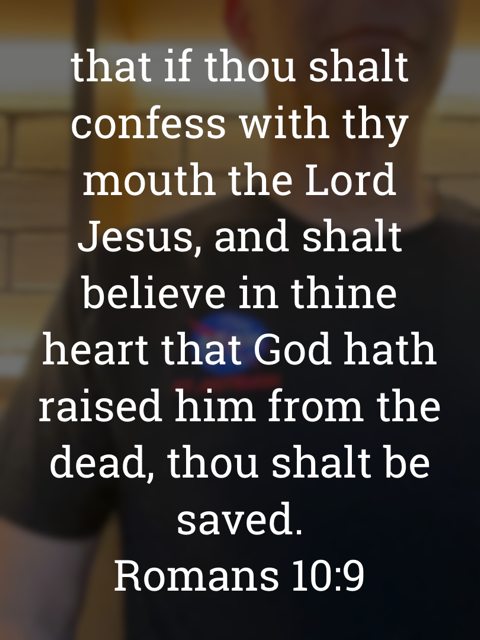
Romans 10:9 (King James Version): “That if thou shalt confess with thy mouth the Lord Jesus, and shalt believe in thine heart that God hath raised him from the dead, thou shalt be saved.”
1. Exegetical Commentary
The immediate context: Romans 10
Romans 10[i] sits within Paul’s larger argument in Romans chapters 9 to 11, where he addresses the relationship between Israel, the Gentiles, and the righteousness of God revealed in Jesus Christ. Paul contrasts two kinds of righteousness:
- Righteousness based on the law
which seeks to establish one’s own standing before God through obedience (Romans 10:3: “For they being ignorant of God’s righteousness, and going about to establish their own righteousness, have not submitted themselves unto the righteousness of God.”). - Righteousness based on faith
which receives God’s gift of salvation through Christ (Romans 10:4: “For Christ is the end of the law for righteousness to every one that believeth.”).
Romans 10:9 is Paul’s clear and concise summary of how the righteousness of faith is received.
Phrase by phrase exposition
1. “That if thou shalt confess with thy mouth the Lord Jesus”
Confession here is not mere verbal acknowledgement. It is a public, open declaration that Jesus is Lord. In the Roman world, “Lord” was a title claimed by Caesar. To confess Jesus as Lord was to declare allegiance to him above all earthly powers.
This confession is not a work that earns salvation; rather, it is the outward expression of an inward reality. It is the fruit of faith, not the cause of it.
Paul expands on this in Romans 10:10: “For with the heart man believeth unto righteousness; and with the mouth confession is made unto salvation.”
The confession is the natural overflow of a heart that has been transformed by grace.
2. “and shalt believe in thine heart that God hath raised him from the dead”
Belief in the resurrection is not optional. It is central to Christian faith. The resurrection is God’s public vindication of Jesus Christ, demonstrating that his sacrifice for sin was accepted and that he truly is Lord.
Paul emphasises this in Romans 4:25: “Who was delivered for our offences, and was raised again for our justification.”
To believe “in the heart” means more than intellectual agreement. It is a deep, personal trust in the risen Christ as Saviour and Lord.
3. “thou shalt be saved”
This is a promise, not a possibility. Salvation is God’s gracious act of rescuing sinners from sin, death, and judgement, and bringing them into fellowship with himself.
Romans 10:13 reinforces this assurance: “For whosoever shall call upon the name of the Lord shall be saved.”
The simplicity of the gospel is on display. Salvation is not achieved by human effort but received by faith in Christ.
2. Theological Teaching
A. Salvation is by faith alone
Romans 10:9 aligns with the broader teaching of Scripture that salvation is a gift of grace received through faith. Paul has already stated in Romans 3:28: “Therefore we conclude that a man is justified by faith without the deeds of the law.”
Confession and belief are not works that merit salvation; they are the means by which faith expresses itself.
B. The Lordship of Christ is essential
To confess Jesus as Lord is to acknowledge his authority over every aspect of life. This is not a two‑stage Christianity where one may accept Jesus as Saviour but not as Lord. The risen Christ is Lord by nature and by right.
C. The resurrection is foundational
Christian faith stands or falls on the resurrection. As Paul writes in 1 Corinthians 15:14: “And if Christ be not risen, then is our preaching vain, and your faith is also vain.”
Belief in the resurrection is belief in the living Christ who continues to save, rule, and intercede.
D. The gospel is universal
Romans 10:12 declares: “For there is no difference between the Jew and the Greek: for the same Lord over all is rich unto all that call upon him.”
The promise of Romans 10:9 is for all people, regardless of background, ethnicity, or past sin.
3. Meditation Guide for Personal and Group Use
A. Reflect on the Lordship of Jesus
- What does it mean for you to confess Jesus as Lord today?
- Are there areas of life where you resist his authority?
- Pray for a heart that joyfully submits to Christ’s rule.
B. Consider the resurrection
- How does the resurrection shape your daily hope?
- Meditate on the reality that Jesus is alive, present, and reigning.
- Thank God for raising Jesus from the dead for your justification.
C. Examine your heart
- Do you trust Christ personally, or only intellectually?
- Ask the Holy Spirit to deepen your faith and strengthen your assurance.
D. Practise confession
- Confession is both verbal and lived.
- How might you openly acknowledge Christ in your workplace, family, or community?
- Pray for courage to confess Christ with clarity and humility.
E. Rest in the promise
- “Thou shalt be saved” is God’s promise.
- Reflect on the security and peace that flow from God’s unchanging word.
- Let this assurance lead you to gratitude and obedience.
4. Practical Application for Modern Christian Living
A. Live openly as a follower of Jesus
In a culture that often prefers private spirituality, Romans 10:9 calls believers to public allegiance. This does not mean being aggressive or self‑righteous, but being willing to identify with Christ in speech and conduct.
B. Hold fast to the resurrection
Modern life is filled with uncertainty, anxiety, and competing worldviews. The resurrection grounds the believer’s hope in a historical, bodily event. It assures us that death is defeated and that Christ’s kingdom is unshakeable.
C. Share the gospel with confidence
Romans 10:9 provides a clear and simple explanation of how a person is saved. It equips believers to speak the gospel plainly and confidently.
D. Cultivate heart‑level faith
Christianity is not merely doctrinal correctness or outward conformity. It is a heart transformed by grace. Believers are called to nurture faith through Scripture, prayer, fellowship, and obedience.
E. Rest in God’s promise, not your performance
Romans 10:9 frees believers from the burden of self‑righteousness. Salvation rests on Christ’s finished work, not on human achievement. This produces humility, joy, and assurance.
[i] Romans 10
King James Version
10 Brethren, my heart’s desire and prayer to God for Israel is, that they might be saved.
2 For I bear them record that they have a zeal of God, but not according to knowledge.
3 For they being ignorant of God’s righteousness, and going about to establish their own righteousness, have not submitted themselves unto the righteousness of God.
4 For Christ is the end of the law for righteousness to every one that believeth.
5 For Moses describeth the righteousness which is of the law, That the man which doeth those things shall live by them.
6 But the righteousness which is of faith speaketh on this wise, Say not in thine heart, Who shall ascend into heaven? (that is, to bring Christ down from above:)
7 Or, Who shall descend into the deep? (that is, to bring up Christ again from the dead.)
8 But what saith it? The word is nigh thee, even in thy mouth, and in thy heart: that is, the word of faith, which we preach;
9 That if thou shalt confess with thy mouth the Lord Jesus, and shalt believe in thine heart that God hath raised him from the dead, thou shalt be saved.
10 For with the heart man believeth unto righteousness; and with the mouth confession is made unto salvation.
11 For the scripture saith, Whosoever believeth on him shall not be ashamed.
12 For there is no difference between the Jew and the Greek: for the same Lord over all is rich unto all that call upon him.
13 For whosoever shall call upon the name of the Lord shall be saved.
14 How then shall they call on him in whom they have not believed? and how shall they believe in him of whom they have not heard? and how shall they hear without a preacher?
15 And how shall they preach, except they be sent? as it is written, How beautiful are the feet of them that preach the gospel of peace, and bring glad tidings of good things!
16 But they have not all obeyed the gospel. For Esaias saith, Lord, who hath believed our report?
17 So then faith cometh by hearing, and hearing by the word of God.
18 But I say, Have they not heard? Yes verily, their sound went into all the earth, and their words unto the ends of the world.
19 But I say, Did not Israel know? First Moses saith, I will provoke you to jealousy by them that are no people, and by a foolish nation I will anger you.
20 But Esaias is very bold, and saith, I was found of them that sought me not; I was made manifest unto them that asked not after me.
21 But to Israel he saith, All day long I have stretched forth my hands unto a disobedient and gainsaying people.
Discover more from Daily bible verses
Subscribe to get the latest posts sent to your email.


You must be logged in to post a comment.