
Commentary on Psalm 103:13
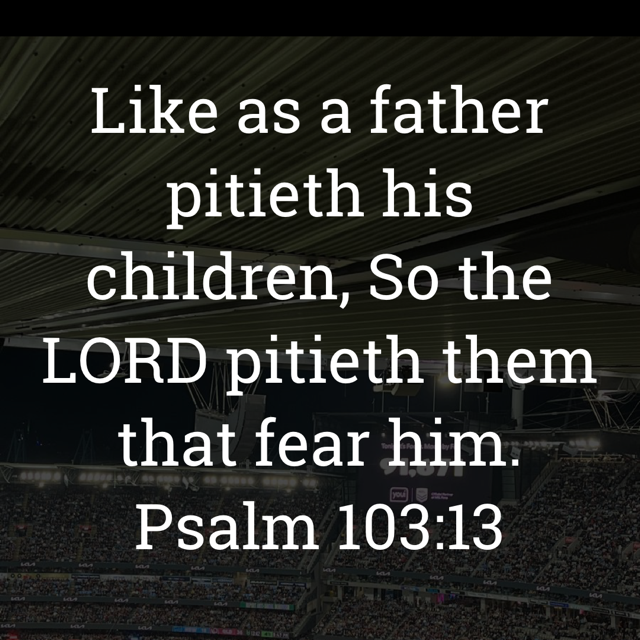
Psalm 103:13 (King James Version): “Like as a father pitieth his children, so the LORD pitieth them that fear him.”
Psalm 103:1–5 (KJV): “Bless the LORD, O my soul: and all that is within me, bless his holy name. Bless the LORD, O my soul, and forget not all his benefits: Who forgiveth all thine iniquities; who healeth all thy diseases; Who redeemeth thy life from destruction; who crowneth thee with lovingkindness and tender mercies; Who satisfieth thy mouth with good things; so that thy youth is renewed like the eagle’s.”
Psalm 103:8 (KJV): “The LORD is merciful and gracious, slow to anger, and plenteous in mercy.”
Psalm 103:14 (KJV): “For he knoweth our frame; he remembereth that we are dust.”
1. Exegetical Commentary
The structure and setting of Psalm 103
Psalm 103[i] is a hymn of praise in which David calls his own soul, and all creation, to bless the Lord for His covenant mercy. The psalm is rich with the language of compassion, forgiveness, steadfast love, and fatherly care. It is deeply personal and profoundly theological, grounding God’s mercy in His character and His covenant.
Psalm 103:13 sits at the heart of the psalm’s argument. It is part of a section (verses 8 to 14) that describes the nature of God’s mercy by comparing it to human relationships and limitations. The verse uses a simile to reveal the tenderness of God’s compassion.
“Like as a father pitieth his children”
The verb “pitieth” in the KJV translates a Hebrew word that carries the sense of deep compassion, tender care, and emotional involvement. It is not mere sympathy; it is active, covenantal compassion.
In the ancient world, a father was expected to protect, guide, discipline, and provide for his children. The image is not sentimental but strong, steady, and committed. A father’s compassion is rooted in relationship, responsibility, and affection.
“So the LORD pitieth them that fear him”
The comparison is deliberate and pastoral. God’s compassion is not less than that of a human father; it is greater, purer, and more faithful.
The phrase “them that fear him” does not describe terror but reverent awe, covenant loyalty, and humble trust. It refers to those who recognise God’s holiness and respond with obedience, repentance, and faith.
This is not a conditional love but a relational one. The fear of the Lord is the posture of those who belong to Him and know Him.
The theological flow of the psalm
Psalm 103 builds a portrait of God’s mercy:
- He forgives
(verse 3). - He heals
(verse 3). - He redeems
(verse 4). - He crowns with lovingkindness and tender mercies
(verse 4). - He renews
(verse 5). - He is merciful and gracious
(verse 8). - He does not deal with us according to our sins
(verse 10). - His mercy is great toward them that fear Him
(verse 11). - He removes our transgressions far from us
(verse 12). - He has fatherly compassion
(verse 13). - He knows our frailty
(verse 14).
Psalm 103:13 is therefore not an isolated statement but part of a sweeping declaration of God’s covenant mercy.
2. Theological Teaching
2.1 God’s fatherly compassion
Christian theology affirms that God reveals Himself as Father to His covenant people. Psalm 103:13 anticipates the fuller revelation of God’s fatherhood in Jesus Christ, who taught His disciples to pray, “Our Father which art in heaven” (Matthew 6:9, KJV).
God’s fatherly compassion is:
- Covenantal
rooted in His promises. - Steadfast
not dependent on our performance. - Tender
involving deep affection. - Understanding
grounded in His knowledge of our frailty (Psalm 103:14). - Redemptive
expressed supremely in Christ’s atoning work.
2.2 The fear of the Lord
The fear of the Lord is a recurring biblical theme. It is not dread but reverence. It is the posture of those who know God’s holiness and trust His mercy.
Christian theology teaches that this fear is the fruit of regeneration and the work of the Holy Spirit. It is not a condition we meet to earn God’s compassion; it is the evidence that we belong to Him.
2.3 The compassion of God in Christ
Psalm 103 finds its fulfilment in Jesus Christ, who embodies the compassion of God:
- “But when he saw the multitudes, he was moved with compassion on them” (Matthew 9:36, KJV).
- “I am the good shepherd: the good shepherd giveth his life for the sheep” (John 10:11, KJV).
The fatherly compassion of Psalm 103:13 is ultimately revealed at the cross, where God’s mercy and justice meet.
3. Meditation Guide
3.1 Reflect on God’s fatherly heart
Sit quietly and consider the image of a father who bends down to comfort a distressed child. Let this image shape your understanding of God’s posture toward you.
Ask yourself:
- Do I believe God looks upon me with compassion?
- Do I imagine Him as harsh or distant?
- How does Psalm 103 correct my view of God?
3.2 Remember God’s benefits
Meditate on Psalm 103:1–5. List the ways God has shown mercy, forgiveness, and kindness in your life.
3.3 Embrace your frailty
Psalm 103:14 reminds us that God knows our weakness. Instead of hiding your frailty, bring it to Him.
Pray:
“Father, you know my frame. You remember that I am dust. Help me to rest in your compassion.”
3.4 Cultivate the fear of the Lord
Reflect on what reverent awe looks like in your daily life:
- obedience
- repentance
- trust
- worship
- humility
Ask God to deepen your reverence for Him.
3.5 Look to Christ
End your meditation by fixing your eyes on Jesus Christ, the perfect revelation of God’s compassion.
4. Practical Application for Modern Christian Living
- Approach God with confidence
knowing His compassion is fatherly and tender. - Let reverence shape your life
not fear of punishment but awe at His mercy. - Be compassionate toward others
reflecting the Father’s heart in your relationships. - Rest in God’s knowledge of your frailty
rather than striving to prove yourself. - Remember God’s benefits daily
cultivating gratitude and praise. - Look to Christ
who embodies the compassion of Psalm 103.
[i] Psalm 103
King James Version
103 Bless the LORD, O my soul: and all that is within me, bless his holy name.
2 Bless the LORD, O my soul, and forget not all his benefits:
3 Who forgiveth all thine iniquities; who healeth all thy diseases;
4 Who redeemeth thy life from destruction; who crowneth thee with lovingkindness and tender mercies;
5 Who satisfieth thy mouth with good things; so that thy youth is renewed like the eagle’s.
6 The LORD executeth righteousness and judgment for all that are oppressed.
7 He made known his ways unto Moses, his acts unto the children of Israel.
8 The LORD is merciful and gracious, slow to anger, and plenteous in mercy.
9 He will not always chide: neither will he keep his anger for ever.
10 He hath not dealt with us after our sins; nor rewarded us according to our iniquities.
11 For as the heaven is high above the earth, so great is his mercy toward them that fear him.
12 As far as the east is from the west, so far hath he removed our transgressions from us.
13 Like as a father pitieth his children, so the LORD pitieth them that fear him.
14 For he knoweth our frame; he remembereth that we are dust.
15 As for man, his days are as grass: as a flower of the field, so he flourisheth.
16 For the wind passeth over it, and it is gone; and the place thereof shall know it no more.
17 But the mercy of the LORD is from everlasting to everlasting upon them that fear him, and his righteousness unto children’s children;
18 To such as keep his covenant, and to those that remember his commandments to do them.
19 The LORD hath prepared his throne in the heavens; and his kingdom ruleth over all.
20 Bless the LORD, ye his angels, that excel in strength, that do his commandments, hearkening unto the voice of his word.
21 Bless ye the LORD, all ye his hosts; ye ministers of his, that do his pleasure.
22 Bless the LORD, all his works in all places of his dominion: bless the LORD, O my soul.
Discover more from Daily bible verses
Subscribe to get the latest posts sent to your email.


You must be logged in to post a comment.