
Commentary on Mark 11:24
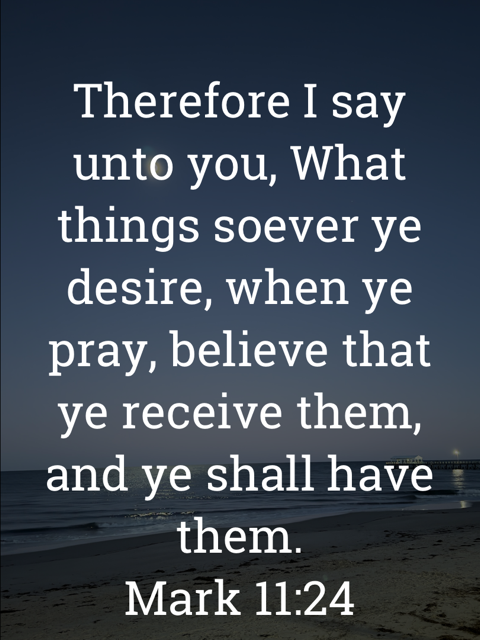
“Therefore I say unto you, What things soever ye desire, when ye pray, believe that ye receive them, and ye shall have them.” (Mark 11:24, King James Version)
1. Immediate Context in Mark 11
Mark 11[i] presents a sequence of events that reveal the authority of Jesus Christ and the nature of true faith. The chapter includes:
- The triumphal entry (Mark 11:1–11). “And Jesus went into Jerusalem, and into the temple: and when he had looked round about upon all things, and now the eventide was come, he went out unto Bethany with the twelve.” (Mark 11:11, KJV)
- The cursing of the fig tree (Mark 11:12–14). “And seeing a fig tree afar off having leaves, he came, if haply he might find any thing thereon: and when he came to it, he found nothing but leaves; for the time of figs was not yet.” (Mark 11:13, KJV)
- The cleansing of the temple (Mark 11:15–19). “And would not suffer that any man should carry any vessel through the temple.” (Mark 11:16, KJV)
- The lesson of the withered fig tree (Mark 11:20–26). “And Peter calling to remembrance saith unto him, Master, behold, the fig tree which thou cursedst is withered away.” (Mark 11:21, KJV)
It is in response to Peter’s astonishment that Jesus teaches about faith, prayer, and forgiveness. Mark 11:24 sits at the heart of this teaching.
2. Exegetical Commentary on Mark 11:24
2.1 “Therefore I say unto you…”
Jesus draws a direct conclusion from the fig tree lesson. The fig tree symbolises Israel’s spiritual barrenness. Its withering demonstrates the authority of Jesus and the seriousness of fruitless religion. The “therefore” signals that prayer grounded in genuine faith stands in contrast to empty religiosity.
2.2 “What things soever ye desire…”
The phrase “what things soever” is broad, but not unbounded. Scripture interprets Scripture. Christian desire must be shaped by:
- The will of God (1 John 5:14). “And this is the confidence that we have in him, that, if we ask any thing according to his will, he heareth us.” (KJV)
- The glory of Christ (John 14:13). “And whatsoever ye shall ask in my name, that will I do, that the Father may be glorified in the Son.” (KJV)
- The fruit of righteousness (Philippians 1:11). “Being filled with the fruits of righteousness, which are by Jesus Christ, unto the glory and praise of God.” (KJV)
Thus, Jesus is not endorsing selfish desire. He is inviting believers to bring their whole lives before God, trusting Him to align their desires with His purposes.
2.3 “When ye pray…”
Prayer is the means by which believers express dependence on God. In Mark 11, prayer is contrasted with the hollow temple practices Jesus condemns. True prayer is relational, reverent, and grounded in trust.
2.4 “Believe that ye receive them…”
This is the heart of the verse. Jesus calls for faith that is confident in God’s character. Faith is not positive thinking. Faith is not presumption. Faith is trust in the God who has revealed Himself in Scripture.
The grammar is striking: “believe that ye receive them.” The receiving is spoken of as present, even though the fulfilment may be future. This reflects the certainty of God’s promises.
2.5 “And ye shall have them.”
This is not a blank cheque. It is a promise conditioned by:
- Faith in God (Mark 11:22). “And Jesus answering saith unto them, Have faith in God.” (KJV)
- A forgiving heart (Mark 11:25). “And when ye stand praying, forgive, if ye have ought against any: that your Father also which is in heaven may forgive you your trespasses.” (KJV)
- Submission to God’s will (Matthew 6:10). “Thy kingdom come. Thy will be done in earth, as it is in heaven.” (KJV)
The promise is sure, but the conditions are real. Faith is not magic; it is relationship.
3. Theological Insights
3.1 Faith is Godward, not inward
Jesus does not say, “Have faith in faith.” He says, “Have faith in God.” Faith is only as strong as its object. The Christian tradition rightly emphasises that faith is a gift of God, grounded in His character and promises.
3.2 Prayer is an act of trust, not technique
Prayer is not a mechanism for manipulating outcomes. It is the believer’s expression of dependence on the sovereign God. The promise of Mark 11:24 is not mechanical; it is relational.
3.3 Desire must be shaped by discipleship
Christian desire is transformed as believers grow in Christ. The more we know God, the more our desires align with His will. Mark 11:24 assumes a heart being shaped by grace.
3.4 Forgiveness is essential to faithful prayer
Jesus immediately links prayer with forgiveness (Mark 11:25). Unforgiveness undermines prayer because it contradicts the gospel. A forgiven people must be a forgiving people.
4. Meditation Guide for Modern Christian Living
4.1 Reflect on God’s character
Meditate on Mark 11:22: “Have faith in God.” Ask:
- What aspects of God’s character strengthen my trust?
- Where am I tempted to trust myself instead?
4.2 Examine your desires
Bring your desires before God honestly. Ask:
- Are my desires shaped by Scripture?
- Do they reflect God’s kingdom priorities?
- Am I willing for God to reshape them?
4.3 Pray with confidence, not presumption
Pray boldly because God is faithful. Pray humbly because God is sovereign. Hold both truths together.
4.4 Practise forgiveness
Before praying, ask:
- Is there anyone I am withholding forgiveness from?
- How does the gospel call me to act?
Forgiveness is not optional. It is part of faithful prayer.
4.5 Trust God’s timing
“Ye shall have them” does not specify when. Meditate on God’s faithfulness in Scripture. Remember that waiting is often part of God’s work in us.
[i] Mark 11
King James Version
11 And when they came nigh to Jerusalem, unto Bethphage and Bethany, at the mount of Olives, he sendeth forth two of his disciples,
2 And saith unto them, Go your way into the village over against you: and as soon as ye be entered into it, ye shall find a colt tied, whereon never man sat; loose him, and bring him.
3 And if any man say unto you, Why do ye this? say ye that the Lord hath need of him; and straightway he will send him hither.
4 And they went their way, and found the colt tied by the door without in a place where two ways met; and they loose him.
5 And certain of them that stood there said unto them, What do ye, loosing the colt?
6 And they said unto them even as Jesus had commanded: and they let them go.
7 And they brought the colt to Jesus, and cast their garments on him; and he sat upon him.
8 And many spread their garments in the way: and others cut down branches off the trees, and strawed them in the way.
9 And they that went before, and they that followed, cried, saying, Hosanna; Blessed is he that cometh in the name of the Lord:
10 Blessed be the kingdom of our father David, that cometh in the name of the Lord: Hosanna in the highest.
11 And Jesus entered into Jerusalem, and into the temple: and when he had looked round about upon all things, and now the eventide was come, he went out unto Bethany with the twelve.
12 And on the morrow, when they were come from Bethany, he was hungry:
13 And seeing a fig tree afar off having leaves, he came, if haply he might find any thing thereon: and when he came to it, he found nothing but leaves; for the time of figs was not yet.
14 And Jesus answered and said unto it, No man eat fruit of thee hereafter for ever. And his disciples heard it.
15 And they come to Jerusalem: and Jesus went into the temple, and began to cast out them that sold and bought in the temple, and overthrew the tables of the moneychangers, and the seats of them that sold doves;
16 And would not suffer that any man should carry any vessel through the temple.
17 And he taught, saying unto them, Is it not written, My house shall be called of all nations the house of prayer? but ye have made it a den of thieves.
18 And the scribes and chief priests heard it, and sought how they might destroy him: for they feared him, because all the people was astonished at his doctrine.
19 And when even was come, he went out of the city.
20 And in the morning, as they passed by, they saw the fig tree dried up from the roots.
21 And Peter calling to remembrance saith unto him, Master, behold, the fig tree which thou cursedst is withered away.
22 And Jesus answering saith unto them, Have faith in God.
23 For verily I say unto you, That whosoever shall say unto this mountain, Be thou removed, and be thou cast into the sea; and shall not doubt in his heart, but shall believe that those things which he saith shall come to pass; he shall have whatsoever he saith.
24 Therefore I say unto you, What things soever ye desire, when ye pray, believe that ye receive them, and ye shall have them.
25 And when ye stand praying, forgive, if ye have ought against any: that your Father also which is in heaven may forgive you your trespasses.
26 But if ye do not forgive, neither will your Father which is in heaven forgive your trespasses.
27 And they come again to Jerusalem: and as he was walking in the temple, there come to him the chief priests, and the scribes, and the elders,
28 And say unto him, By what authority doest thou these things? and who gave thee this authority to do these things?
29 And Jesus answered and said unto them, I will also ask of you one question, and answer me, and I will tell you by what authority I do these things.
30 The baptism of John, was it from heaven, or of men? answer me.
31 And they reasoned with themselves, saying, If we shall say, From heaven; he will say, Why then did ye not believe him?
32 But if we shall say, Of men; they feared the people: for all men counted John, that he was a prophet indeed.
33 And they answered and said unto Jesus, We cannot tell. And Jesus answering saith unto them, Neither do I tell you by what authority I do these things.
Discover more from Daily bible verses
Subscribe to get the latest posts sent to your email.


You must be logged in to post a comment.