
Commentary on Ephesians 4:2
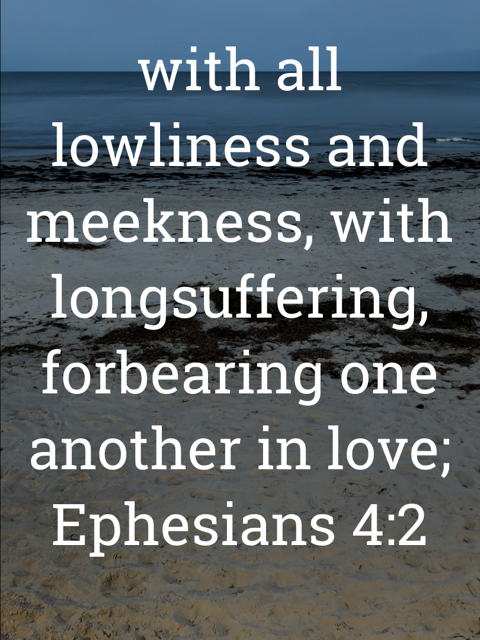
Ephesians 4:2 “With all lowliness and meekness, with longsuffering, forbearing one another in love.”
The Apostle Paul’s exhortation in Ephesians 4:2 sits within a larger call to live a life worthy of the Christian vocation. Ephesians 4[i] marks a turning point in the epistle: Paul moves from the doctrinal heights of chapters 1 to 3 to the practical outworking of the gospel in the life of the church. The verse is short, but it is densely packed with virtues that shape Christian character and community.
Exegetical Insights
1. “With all lowliness”
Paul begins with lowliness, a term that in the Greco-Roman world was often despised. Humility was not considered a virtue in the ancient world, yet Paul places it first. The word points to a deep recognition of one’s dependence on God and a refusal to exalt oneself over others.
This aligns with the Christlike humility described elsewhere:
Philippians 2:3 “Let nothing be done through strife or vainglory; but in lowliness of mind let each esteem other better than themselves.”
Humility is foundational because without it, the other virtues in Ephesians 4:2 cannot flourish.
2. “And meekness”
Meekness is not weakness. It is strength under control. It is the disposition of a person who does not insist on their own rights but entrusts themselves to God.
Jesus embodies meekness:
Matthew 11:29 “Take my yoke upon you, and learn of me; for I am meek and lowly in heart: and ye shall find rest unto your souls.”
Meekness is relational. It shapes how we respond to provocation, disagreement, and disappointment.
3. “With longsuffering”
Longsuffering is patient endurance. It is the ability to bear with others over time, especially when they frustrate, offend, or disappoint us.
Paul uses the same term in describing the fruit of the Spirit:
Galatians 5:22 “But the fruit of the Spirit is love, joy, peace, longsuffering, gentleness, goodness, faith.”
Longsuffering is not passive resignation; it is active, hopeful patience grounded in God’s patience with us.
4. “Forbearing one another in love”
Forbearance means putting up with one another. It is the practical expression of longsuffering. But Paul adds the crucial qualifier: in love.
This is not grudging tolerance. It is the deliberate choice to extend grace because Christ has extended grace to us.
Colossians 3:13 “Forbearing one another, and forgiving one another, if any man have a quarrel against any: even as Christ forgave you, so also do ye.”
Forbearance is the glue of Christian community. Without it, unity collapses under the weight of human frailty.
Theological Teaching
1. The virtues of Ephesians 4:2 reflect the character of Christ
Paul’s exhortation is not moralism. It is Christ-shaped living. Each virtue mirrors Christ’s own disposition: humility, meekness, patience, and love.
2. These virtues are essential for Christian unity
Ephesians 4:3 continues:
Ephesians 4:3 “Endeavouring to keep the unity of the Spirit in the bond of peace.”
Unity is not achieved through organisational structures but through Spirit-enabled character.
3. The gospel creates a new community
Ephesians emphasises that believers are one body. These virtues are not optional; they are necessary for the health of the body.
4. Sanctification is communal
Paul assumes Christians live in close fellowship. Growth in holiness happens in relationship, not isolation.
Practical Application for Modern Christian Living
1. Cultivate humility in a culture of self-promotion
Modern life encourages self-assertion, personal branding, and constant comparison. Humility frees us from the exhausting need to prove ourselves.
Ask: How can I esteem others more highly today?
2. Practise meekness in conflict
Meekness restrains the impulse to retaliate or dominate. In family life, workplaces, and church communities, meekness diffuses tension and opens space for reconciliation.
Ask: How can I respond gently rather than react defensively?
3. Exercise longsuffering with difficult people
Every Christian community has challenging personalities. Longsuffering is the Spirit-enabled ability to remain patient without bitterness.
Ask: Where do I need to extend patient endurance rather than irritation?
4. Forbear in love, not mere tolerance
Forbearance is active love. It means choosing grace over resentment.
Ask: Whom do I need to bear with today in a way that reflects Christ’s love for me?
5. Remember God’s patience with you
The motivation for these virtues is not human effort but divine grace.
Romans 2:4 “…the goodness of God leadeth thee to repentance?”
God’s patience with us fuels our patience with others.
Meditation Guide on Ephesians 4:2
1. Prepare
Sit quietly. Ask the Lord to soften your heart and open your mind to his Word.
2. Read the verse slowly
“With all lowliness and meekness, with longsuffering, forbearing one another in love.”
Let each phrase settle.
3. Reflect
- Where is pride hindering humility?
- Where do you need Christlike meekness?
- Who tests your patience, and how might you respond with longsuffering?
- What would it look like to forbear in love rather than tolerate in frustration?
4. Pray
- Ask God to form Christlike humility in you.
- Ask for the Spirit’s power to respond with meekness.
- Ask for patience that reflects God’s patience with you.
- Ask for love that bears with others generously.
5. Act
Choose one practical step today: A gentle word, a patient response, a loving forbearance.
[i] Ephesians 4
King James Version
4 I therefore, the prisoner of the Lord, beseech you that ye walk worthy of the vocation wherewith ye are called,
2 With all lowliness and meekness, with longsuffering, forbearing one another in love;
3 Endeavouring to keep the unity of the Spirit in the bond of peace.
4 There is one body, and one Spirit, even as ye are called in one hope of your calling;
5 One Lord, one faith, one baptism,
6 One God and Father of all, who is above all, and through all, and in you all.
7 But unto every one of us is given grace according to the measure of the gift of Christ.
8 Wherefore he saith, When he ascended up on high, he led captivity captive, and gave gifts unto men.
9 (Now that he ascended, what is it but that he also descended first into the lower parts of the earth?
10 He that descended is the same also that ascended up far above all heavens, that he might fill all things.)
11 And he gave some, apostles; and some, prophets; and some, evangelists; and some, pastors and teachers;
12 For the perfecting of the saints, for the work of the ministry, for the edifying of the body of Christ:
13 Till we all come in the unity of the faith, and of the knowledge of the Son of God, unto a perfect man, unto the measure of the stature of the fulness of Christ:
14 That we henceforth be no more children, tossed to and fro, and carried about with every wind of doctrine, by the sleight of men, and cunning craftiness, whereby they lie in wait to deceive;
15 But speaking the truth in love, may grow up into him in all things, which is the head, even Christ:
16 From whom the whole body fitly joined together and compacted by that which every joint supplieth, according to the effectual working in the measure of every part, maketh increase of the body unto the edifying of itself in love.
17 This I say therefore, and testify in the Lord, that ye henceforth walk not as other Gentiles walk, in the vanity of their mind,
18 Having the understanding darkened, being alienated from the life of God through the ignorance that is in them, because of the blindness of their heart:
19 Who being past feeling have given themselves over unto lasciviousness, to work all uncleanness with greediness.
20 But ye have not so learned Christ;
21 If so be that ye have heard him, and have been taught by him, as the truth is in Jesus:
22 That ye put off concerning the former conversation the old man, which is corrupt according to the deceitful lusts;
23 And be renewed in the spirit of your mind;
24 And that ye put on the new man, which after God is created in righteousness and true holiness.
25 Wherefore putting away lying, speak every man truth with his neighbour: for we are members one of another.
26 Be ye angry, and sin not: let not the sun go down upon your wrath:
27 Neither give place to the devil.
28 Let him that stole steal no more: but rather let him labour, working with his hands the thing which is good, that he may have to give to him that needeth.
29 Let no corrupt communication proceed out of your mouth, but that which is good to the use of edifying, that it may minister grace unto the hearers.
30 And grieve not the holy Spirit of God, whereby ye are sealed unto the day of redemption.
31 Let all bitterness, and wrath, and anger, and clamour, and evil speaking, be put away from you, with all malice:
32 And be ye kind one to another, tenderhearted, forgiving one another, even as God for Christ’s sake hath forgiven you.
Discover more from Daily bible verses
Subscribe to get the latest posts sent to your email.


You must be logged in to post a comment.