
Commentary on 1 Corinthians 10:13
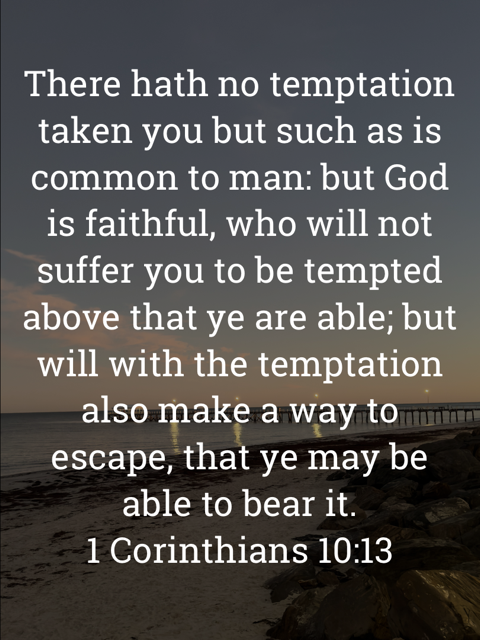
King James Version (public domain): “There hath no temptation taken you but such as is common to man: but God is faithful, who will not suffer you to be tempted above that ye are able; but will with the temptation also make a way to escape, that ye may be able to bear it.”
✦ Concise Takeaway
The apostle Paul teaches that every temptation Christians face is ordinary to human life, that God remains unfailingly faithful, and that God always provides a real, practical way to endure and resist temptation. This verse is not a promise of exemption from hardship, but a promise of divine faithfulness in hardship.
✦ Exegetical Commentary
1. The Context of 1 Corinthians 10[i]
Paul addresses a church struggling with pride, idolatry, sexual immorality, and disunity. He warns them by recalling Israel’s failures in the wilderness.
1 Corinthians 10:6 (KJV): “Now these things were our examples, to the intent we should not lust after evil things, as they also lusted.”
1 Corinthians 10:11 (KJV): “Now all these things happened unto them for ensamples: and they are written for our admonition, upon whom the ends of the world are come.”
Paul’s point is clear: temptation is real, dangerous, and capable of destroying those who treat it lightly. Yet, in verse 13, he shifts from warning to encouragement.
2. “There hath no temptation taken you but such as is common to man”
Paul dismantles the Corinthian tendency to think their temptations were unique or excusable. Temptation is part of the ordinary human condition.
This includes:
- Temptation to pride
- Temptation to sexual sin
- Temptation to idolatry
- Temptation to grumbling or dissatisfaction
- Temptation to presumption
Paul’s pastoral wisdom is to normalise the experience of temptation without trivialising it. Christians are not freakish or defective because they struggle. They are human.
3. “But God is faithful”
This is the theological centre of the verse. Paul does not say, “You are strong,” or “You can do it.” He says, “God is faithful.”
God’s faithfulness is expressed in two ways:
- He governs the limits of temptation.
- He provides a way to endure temptation.
This reflects the character of God revealed throughout Scripture.
Lamentations 3:22–23 (KJV): “It is of the Lord’s mercies that we are not consumed… great is thy faithfulness.”
Psalm 46:1 (KJV): “God is our refuge and strength, a very present help in trouble.”
The God who saved Israel, who raised Jesus from the dead, and who poured out the Holy Spirit is the same God who sustains believers in temptation.
4. “Who will not suffer you to be tempted above that ye are able”
This does not mean believers will never feel overwhelmed. It means God sovereignly restrains temptation so that it never becomes impossible to endure.
Paul is not teaching:
- that Christians will never face severe trials
- that Christians will never feel weak
- that Christians will never fail
He is teaching that God never abandons his people to a temptation that has no faithful path through it.
5. “But will with the temptation also make a way to escape”
The “way to escape” is not necessarily removal from the situation. Often, it is the strength to endure faithfully.
The Greek term for “escape” (ekbasis) can mean “exit” or “outcome.” Paul’s emphasis is not on escape from the circumstance but escape from sin.
Examples of God’s “way to escape”:
- Joseph fleeing Potiphar’s wife
- Jesus answering Satan with Scripture
- David choosing repentance rather than hardening his heart
- A believer choosing prayer, accountability, or physical removal from a tempting environment
6. “That ye may be able to bear it”
The goal is endurance, not avoidance. God’s grace strengthens believers to carry the weight of temptation without collapsing into sin.
This aligns with Paul’s later teaching:
1 Corinthians 15:10 (KJV): “But by the grace of God I am what I am… yet not I, but the grace of God which was with me.”
The Christian life is not stoic self-reliance. It is Spirit-enabled perseverance.
✦ Theological Teaching
1. Temptation is universal
Christians should neither be surprised by temptation nor ashamed of experiencing it.
2. God’s sovereignty governs temptation
Temptation is never outside God’s control. He sets its boundaries.
3. God’s faithfulness is the believer’s hope
The verse centres on God’s character, not human ability.
4. Escape is not always removal
Sometimes God removes the temptation. Often he strengthens the believer to endure it.
5. Endurance is the goal
Holiness is shaped through faithful perseverance.
✦ Application to Modern Christian Living
1. Reject the myth of unique temptation
Believers today often think:
- “No one else struggles like I do.”
- “My situation is special.”
- “My sin is excusable because my temptation is exceptional.”
Paul says otherwise. This frees Christians from isolation and self-pity.
2. Cultivate confidence in God’s faithfulness
When facing temptation, the believer should consciously recall:
- God is present.
- God is faithful.
- God has already prepared a way to endure.
This shifts the focus from self to God.
3. Use the “way of escape” God provides
This may include:
- prayer
- Scripture
- accountability
- confession
- physical removal from a tempting environment
- wise boundaries
- seeking pastoral support
- remembering the gospel
4. Expect endurance, not ease
Christians should not assume that God’s help means the temptation will vanish. Often, God’s help is the strength to persevere.
5. Encourage one another
Because temptation is “common to man,” Christians should support one another with honesty, humility, and grace.
✦ Meditation Guide
Reflect
- What temptations do I currently face?
- Do I believe they are “common to man,” or do I treat them as exceptional?
- How have I seen God’s faithfulness in past temptations?
Pray
- Thank God for his faithfulness.
- Ask for clarity to see the “way of escape.”
- Ask for strength to endure temptation faithfully.
Act
- Identify one practical “way of escape” for a current temptation.
- Share your struggle with a trusted Christian friend or pastor.
- Memorise 1 Corinthians 10:13.
[i] 1 Corinthians 10
King James Version
10 Moreover, brethren, I would not that ye should be ignorant, how that all our fathers were under the cloud, and all passed through the sea;
2 And were all baptised unto Moses in the cloud and in the sea;
3 And did all eat the same spiritual meat;
4 And did all drink the same spiritual drink: for they drank of that spiritual Rock that followed them: and that Rock was Christ.
5 But with many of them God was not well pleased: for they were overthrown in the wilderness.
6 Now these things were our examples, to the intent we should not lust after evil things, as they also lusted.
7 Neither be ye idolaters, as were some of them; as it is written, The people sat down to eat and drink, and rose up to play.
8 Neither let us commit fornication, as some of them committed, and fell in one day three and twenty thousand.
9 Neither let us tempt Christ, as some of them also tempted, and were destroyed of serpents.
10 Neither murmur ye, as some of them also murmured, and were destroyed of the destroyer.
11 Now all these things happened unto them for examples: and they are written for our admonition, upon whom the ends of the world are come.
12 Wherefore let him that thinketh he standeth take heed lest he fall.
13 There hath no temptation taken you but such as is common to man: but God is faithful, who will not suffer you to be tempted above that ye are able; but will with the temptation also make a way to escape, that ye may be able to bear it.
14 Wherefore, my dearly beloved, flee from idolatry.
15 I speak as to wise men; judge ye what I say.
16 The cup of blessing which we bless, is it not the communion of the blood of Christ? The bread which we break, is it not the communion of the body of Christ?
17 For we being many are one bread, and one body: for we are all partakers of that one bread.
18 Behold Israel after the flesh: are not they which eat of the sacrifices partakers of the altar?
19 What say I then? that the idol is any thing, or that which is offered in sacrifice to idols is any thing?
20 But I say, that the things which the Gentiles sacrifice, they sacrifice to devils, and not to God: and I would not that ye should have fellowship with devils.
21 Ye cannot drink the cup of the Lord, and the cup of devils: ye cannot be partakers of the Lord’s table, and of the table of devils.
22 Do we provoke the Lord to jealousy? are we stronger than he?
23 All things are lawful for me, but all things are not expedient: all things are lawful for me, but all things edify not.
24 Let no man seek his own, but every man another’s wealth.
25 Whatsoever is sold in the shambles, that eat, asking no question for conscience sake:
26 For the earth is the Lord’s, and the fulness thereof.
27 If any of them that believe not bid you to a feast, and ye be disposed to go; whatsoever is set before you, eat, asking no question for conscience sake.
28 But if any man say unto you, this is offered in sacrifice unto idols, eat not for his sake that shewed it, and for conscience sake: for the earth is the Lord’s, and the fulness thereof:
29 Conscience, I say, not thine own, but of the other: for why is my liberty judged of another man’s conscience?
30 For if I by grace be a partaker, why am I evil spoken of for that for which I give thanks?
31 Whether therefore ye eat, or drink, or whatsoever ye do, do all to the glory of God.
32 Give none offence, neither to the Jews, nor to the Gentiles, nor to the church of God:
33 Even as I please all men in all things, not seeking mine own profit, but the profit of many, that they may be saved.
Discover more from Daily bible verses
Subscribe to get the latest posts sent to your email.


You must be logged in to post a comment.