
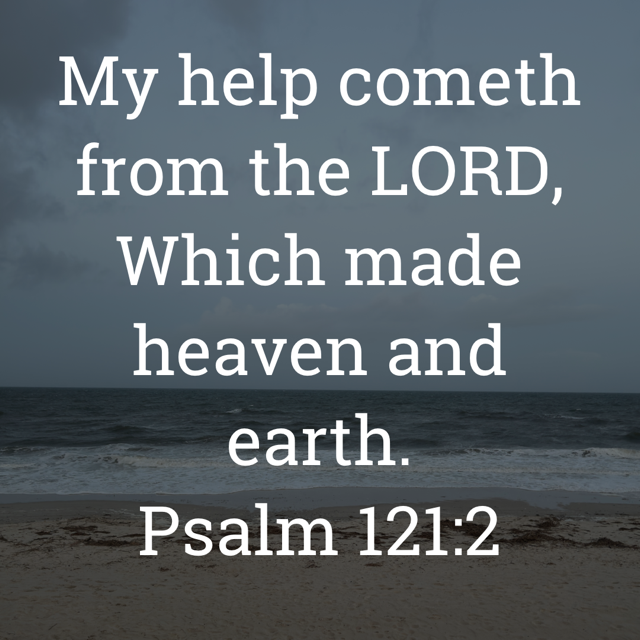
Commentary on Psalm 121:2
My help is in the LORD, which made heaven and earth. Psalm 121:2 teaches that the believer’s help is not finally found in human strength, favourable circumstances, religious feeling, or the hills themselves, but in the covenant LORD, the Maker of heaven and earth. The verse answers the question raised in Psalm 121:1: “I will lift up mine eyes unto the hills, from whence cometh my help.” The pilgrim looks upward, but his confidence rests higher than the hills. His help comes from the LORD, whose creative power, covenant faithfulness, and watchful care sustain his people.
Scripture text
Psalm 121:1–8. “I will lift up mine eyes unto the hills, from whence cometh my help. My help cometh from the LORD, which made heaven and earth. He will not suffer thy foot to be moved: he that keepeth thee will not slumber. Behold, he that keepeth Israel shall neither slumber nor sleep. The LORD is thy keeper: the LORD is thy shade upon thy right hand. The sun shall not smite thee by day, nor the moon by night. The LORD shall preserve thee from all evil: he shall preserve thy soul. The LORD shall preserve thy going out and thy coming in from this time forth, and even for evermore.”
1. Exegesis of Psalm 121:2
Psalm 121:2. “My help cometh from the LORD, which made heaven and earth.” The verse is the answer to the worshipper’s question in Psalm 121:1. The “hills” may be the visible route of pilgrimage, the place where danger appears, or the direction of Jerusalem. Yet the psalm does not teach trust in scenery, sacred places, or human confidence. Help comes from “the LORD,” the covenant name of God, who binds himself to his people in faithful love. The phrase “which made heaven and earth” grounds that help in God’s sovereign power as Creator. The One who made all things is not limited by any threat within creation.
2. Theological teaching
- God is covenantally near. The LORD is not an unnamed spiritual force. He is the covenant God of Israel, now known fully through Jesus Christ.
- God is sovereign over creation. Because he made heaven and earth, no circumstance is outside his rule.
- God’s providence is personal. Psalm 121 moves from “my help” to “thy keeper”, showing that God’s rule is not cold control but watchful care.
- God’s help is not always escape from trouble. The psalm promises preservation, not a pain-free life. The Lord preserves the soul and keeps his people to the end.
3. Practical application
- When anxious, name the lesser helps you are tempted to trust, then confess that your true help comes from the LORD.
- When planning, use ordinary means wisely, but do not treat them as ultimate.
- When suffering, remember that the Creator is not overwhelmed by what overwhelms you.
- When praying for others, ask God not only to change circumstances but also to keep their souls faithful.
4. Meditation guide
- Read: Read Psalm 121 aloud slowly, then repeat Psalm 121:2 three times.
- Observe: Notice the movement from the pilgrim’s question to personal confession.
- Reflect: Ask, “Where am I looking for help apart from the LORD?”
- Pray: “LORD, Maker of heaven and earth, teach me to receive your help, trust your providence, and rest in your faithful keeping.”
- Act: Choose one anxiety today and deliberately bring it to God before acting on it.
In the fullness of Scripture, this help is seen most clearly in Jesus Christ. The same Lord who keeps Israel sends his Son to save his people, shepherd them, and bring them safely home. The Christian therefore reads Psalm 121 not as vague comfort, but as covenant comfort fulfilled in Christ, who is both the Good Shepherd and the risen Lord who keeps his own.
Discover more from Daily bible verses
Subscribe to get the latest posts sent to your email.


You must be logged in to post a comment.