
Commentary on Psalm 19:14
Psalm 19
King James Version
19 The heavens declare the glory of God; and the firmament sheweth his handywork.
2 Day unto day uttereth speech, and night unto night sheweth knowledge.
3 There is no speech nor language, where their voice is not heard.
4 Their line is gone out through all the earth, and their words to the end of the world. In them hath he set a tabernacle for the sun,
5 Which is as a bridegroom coming out of his chamber, and rejoiceth as a strong man to run a race.
6 His going forth is from the end of the heaven, and his circuit unto the ends of it: and there is nothing hid from the heat thereof.
7 The law of the LORD is perfect, converting the soul: the testimony of the LORD is sure, making wise the simple.
8 The statutes of the LORD are right, rejoicing the heart: the commandment of the LORD is pure, enlightening the eyes.
9 The fear of the LORD is clean, enduring for ever: the judgments of the LORD are true and righteous altogether.
10 More to be desired are they than gold, yea, than much fine gold: sweeter also than honey and the honeycomb.
11 Moreover by them is thy servant warned: and in keeping of them there is great reward.
12 Who can understand his errors? cleanse thou me from secret faults.
13 Keep back thy servant also from presumptuous sins; let them not have dominion over me: then shall I be upright, and I shall be innocent from the great transgression.
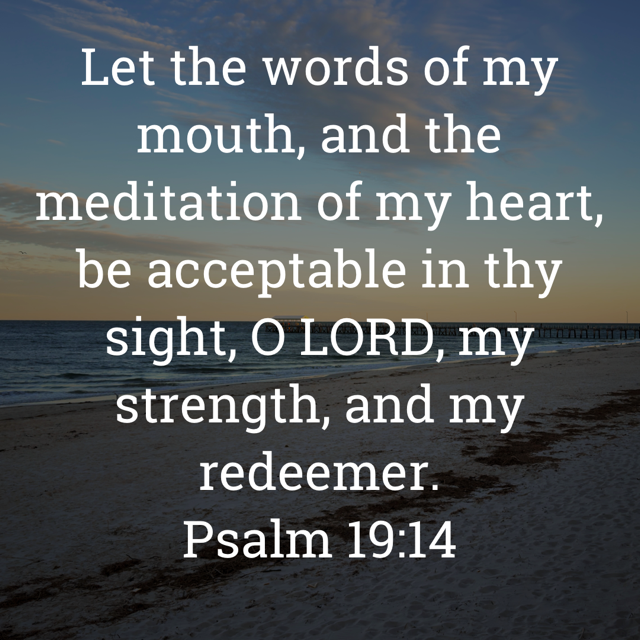
14 Let the words of my mouth, and the meditation of my heart, be acceptable in thy sight, O LORD, my strength, and my redeemer.
Key text: “Let the words of my mouth, and the meditation of my heart, be acceptable in thy sight, O LORD, my strength, and my redeemer.”
Overview of Psalm 19
Psalm 19 moves from the broad witness of creation, to the clear witness of Scripture, and then to the humble prayer of the believer. The heavens declare God’s glory, the law of the LORD reveals God’s will, and the servant of God responds with repentance, dependence, and worship.
Key Biblical Context
- Psalm 19:1. “The heavens declare the glory of God; and the firmament sheweth his handywork.” Creation gives public, continual testimony to God’s glory.
- Psalm 19:7. “The law of the LORD is perfect, converting the soul: the testimony of the LORD is sure, making wise the simple.” Scripture does what creation cannot do: it restores, instructs, and makes wise.
- Psalm 19:12. “Who can understand his errors? cleanse thou me from secret faults.” The revealed word exposes hidden sin and teaches the believer to seek mercy.
- Psalm 19:13. “Keep back thy servant also from presumptuous sins; let them not have dominion over me: then shall I be upright, and I shall be innocent from the great transgression.” David asks not only for forgiveness, but for preserving grace.
- Psalm 19:14. “Let the words of my mouth, and the meditation of my heart, be acceptable in thy sight, O LORD, my strength, and my redeemer.” The psalm ends with a whole-person prayer: speech, thought, worship, dependence, and hope.
1. Exegesis of Psalm 19:14
Psalm 19:14 is David’s concluding prayer. After seeing God’s glory in creation and God’s holiness in Scripture, David does not end with abstract admiration. He brings himself before God. The verse asks that both outward speech and inward thought would be pleasing to the LORD.
- “The words of my mouth.” David asks God to govern what he says. His prayer includes ordinary conversation, worship, confession, teaching, correction, and witness.
- “The meditation of my heart.” David goes beneath speech to the inner life. Words begin in the heart; therefore, he asks God to purify the source, not only the expression.
- “Be acceptable in thy sight.” The language recalls acceptable offering. David’s prayer is that his inner and outer life would be received by God, not as self-earned merit, but as reverent worship offered by grace.
- “O LORD.” The covenant name points to the faithful God who reveals himself, binds himself to his people, and keeps his promises.
- “My strength.” The word carries the sense of rock, refuge, and firm support. David does not trust his moral resolve; he rests on God.
- “My redeemer.” God is the one who rescues, restores, and claims his people. In Christian reading, this finds its fullest expression in Jesus Christ, who redeems sinners through his obedience, death, and resurrection.
2. Theological Teaching
- God reveals himself truly. Psalm 19 teaches that creation declares God’s glory, and Scripture reveals God’s character, will, and saving instruction. “The heavens declare the glory of God; and the firmament sheweth his handywork” (Psalm 19:1). “The law of the LORD is perfect, converting the soul: the testimony of the LORD is sure, making wise the simple” (Psalm 19:7).
- God’s word exposes the heart. David’s prayer follows the confession, “Who can understand his errors? cleanse thou me from secret faults” (Psalm 19:12). Scripture does not merely inform the mind; it searches and corrects the person before God.
- Sanctification reaches speech and thought. Holiness is not only public behaviour. The Lord claims the tongue and the heart. The believer asks for grace so that inner meditation and spoken words honour God.
- Grace precedes acceptable obedience. David calls the LORD “my strength, and my redeemer” (Psalm 19:14). The prayer is not moral self-improvement detached from salvation. It is the cry of a servant who depends on God’s redeeming mercy.
- Christ fulfils the hope of redemption. The New Testament reveals the fullness of redemption in Christ: “In whom we have redemption through his blood, the forgiveness of sins, according to the riches of his grace” (Ephesians 1:7). The believer’s acceptable life is grounded in union with Christ, not personal worthiness.
3. Practical Application for Modern Christian Living
- Pray before you speak. Ask whether your words are true, necessary, gracious, and faithful before God.
- Watch the private life of the mind. Resentment, pride, anxiety, envy, and self-pity often form silently before they become speech or action.
- Let Scripture examine you. Read the Bible not only for information, but for repentance, comfort, correction, and renewed trust.
- Practise confession without despair. Psalm 19 leads from exposure to prayer. Hidden and presumptuous sins should drive believers to the Redeemer, not into denial or hopelessness.
- Bring digital speech under the Lordship of Christ. Emails, messages, social media posts, meeting comments, and private conversations all belong before God.
- Depend on grace daily. David does not say, “I will make myself acceptable.” He prays to the LORD, his strength and redeemer. Christian obedience grows from dependence, not self-reliance.
4. Meditation Guide
Prepare
Sit quietly before God. Read Psalm 19:14 slowly aloud: “Let the words of my mouth, and the meditation of my heart, be acceptable in thy sight, O LORD, my strength, and my redeemer.”
Reflect
- What have my words revealed about my heart this week?
- What thoughts have I allowed to shape my speech, reactions, or decisions?
- Where do I need cleansing from hidden sin?
- Where do I need God to keep me from deliberate sin?
- How does knowing the LORD as my strength and redeemer give me courage to repent?
Pray
O LORD, my strength and my redeemer, search my heart by your word. Cleanse me from hidden faults, restrain me from proud and wilful sin, and shape my words and thoughts so that they are acceptable in your sight. Teach me to speak with truth, humility, courage, and grace. I trust not in my own strength, but in your redeeming mercy through Jesus Christ. Amen.
Practise
- Choose one conversation today where you will intentionally speak with patience and grace.
- Pause before sending written communication, and ask whether it is acceptable before God.
- Memorise Psalm 19:14, and pray it at the start of the day.
- At day’s end, confess where your words and thoughts fell short, and give thanks that Christ is your redeemer.
Discover more from Daily bible verses
Subscribe to get the latest posts sent to your email.


You must be logged in to post a comment.